Why this blonde gal got hooked on running
Why I Run: Stories from Runners
Vol.2 Sayaka Ashino Part 1
Text: Shun Sato

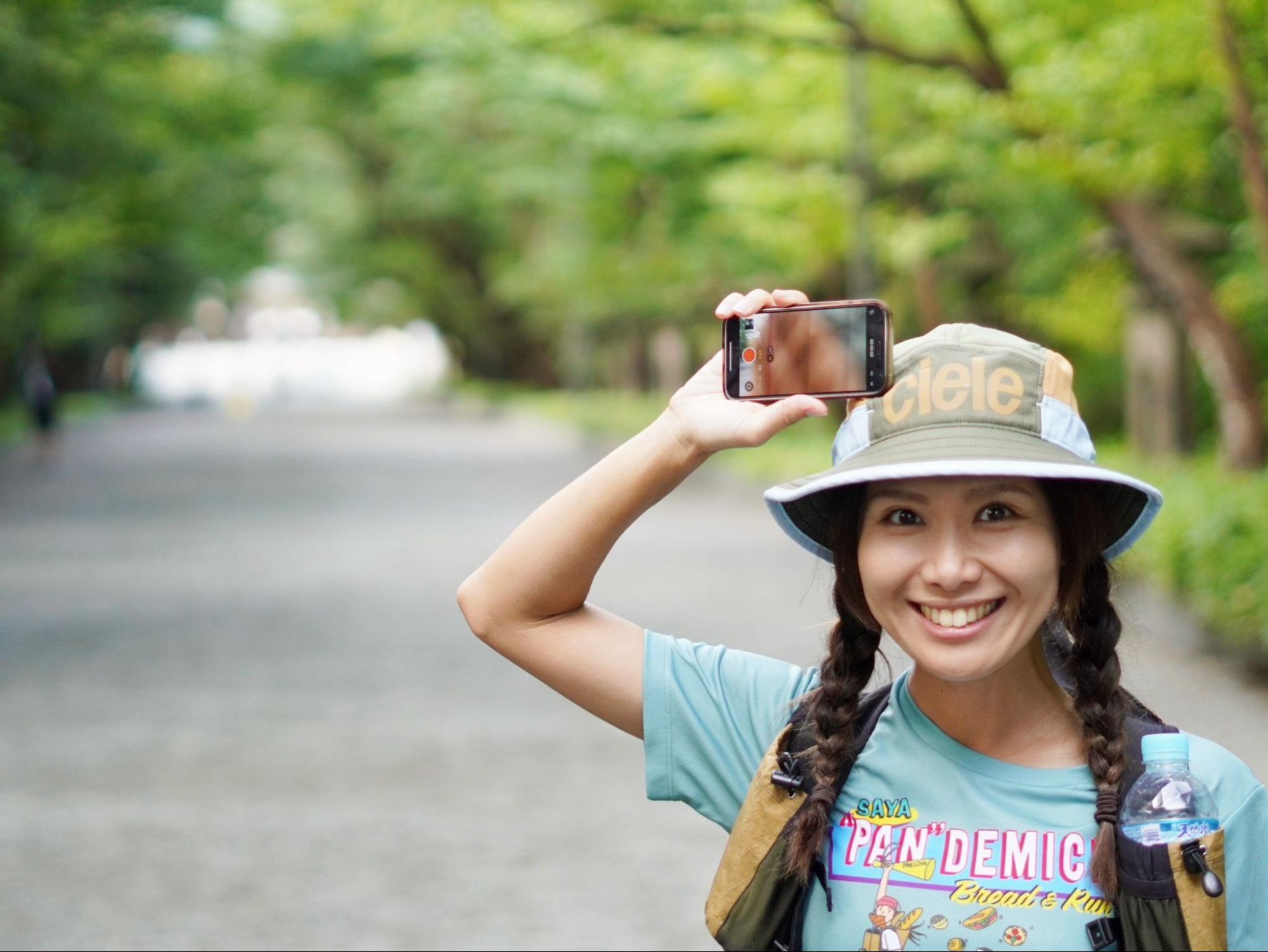
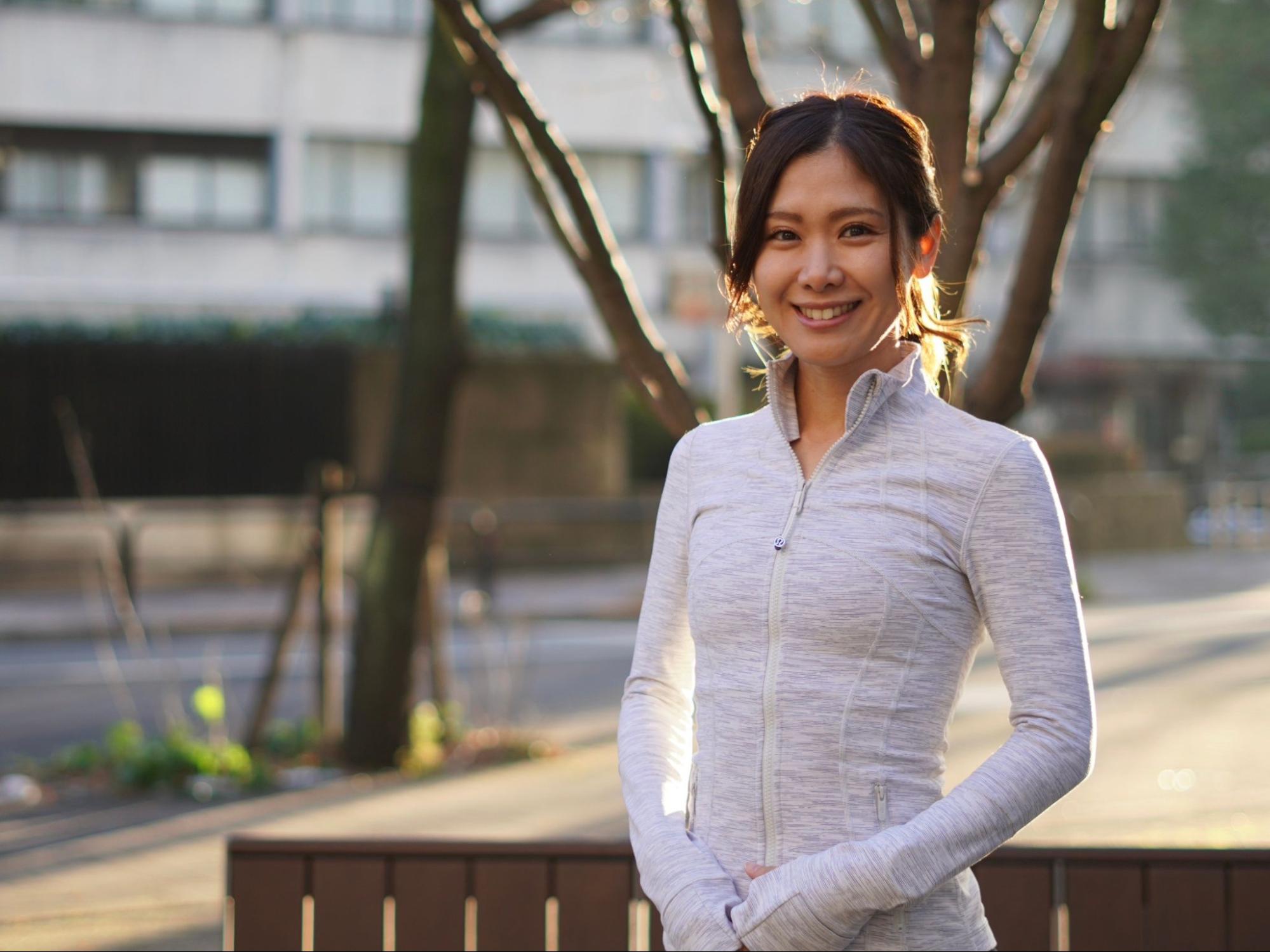
She's cheerful, smiling, and enjoys running.
Anyone who has run alongside Sayaka Ashino, also known as "Sayapi," likely has the same impression. While she started running as a hobby while working as an office worker, she has now completed a marathon in 3 hours and 9 minutes, achieved a sub-10 time in an ultramarathon, and even organized a bread run, making running her job.
"The only thing I've ever been into in my life is running."
Why does Sayaka, who says this, continue to run?

She was a blonde gal when she was a student.
"From junior high to high school, I didn't join any clubs or do any sports. I spent my days singing karaoke and working part-time jobs, and I was a gal living in the countryside of Hokkaido (laughs)."
I liked to exercise. If I felt like playing basketball that day, I'd join the basketball club, and the next day I'd drop by the volleyball club or hang out with the table tennis club. I just didn't like doing things in a set place at a set time with a set person.
For this reason, she never joined any clubs, nor did she get into hobbies like idols or anime. She was a blonde gal, and enjoyed her youth freely and carefree.

"At the time, there wasn't anything in particular that I was passionate about."
During my university days, I was interested in fashion, so I worked part-time at a select shop.
After graduating, Sayaka got a job at the fashion brand Armani, but the trigger for this was her experience as a welfare volunteer in junior high and high school and a training course she undertook during her university years. Her mother was a welfare volunteer, so she often went to help out at facilities.
"I went to help out as a blonde, and the people at the facility and the users didn't have any prejudice about my appearance and just saw me as someone who was there to help out, which made me really happy. From then on, I started to have an open mind and wanted to help others."

Achieved the highest sales in Japan
Sayaka, who studied welfare psychology at university, spent a month in a child welfare facility as part of her training, living with children who, for various reasons, could not live with their parents. She learned that these innocent children are often viewed with prejudice and often face difficulties when looking for employment.
If only I could create a place where all children could work with enthusiasm... I wanted to do something that would combine my love of fashion with the future of children.
"To achieve this, I decided to first learn about first-class service, and when I looked around Sapporo, I found a place that provided the ideal level of customer service, with customers enjoying their time with smiles on their faces. I thought, 'This is it!' I immediately sent a letter saying, 'I want to work here,' but they said they don't have openings every year... But that year, they happened to be hiring new graduates."

Sayaka's passion was conveyed, and she was hired and assigned to the Omotesando store. After a year and a half, she was transferred to the Shinjuku store, which boasts the highest sales in Japan. At first, her superiors criticized her appearance, tone of voice, speaking style, posture, and choice of words, saying that they were not appropriate for a place that provides luxurious hospitality.
Then I lowered my voice, spoke at a pace that was comfortable for each customer, carefully conveyed product knowledge, and made suggestions for total coordination for all customers, striving to become the right staff member.
When customers of both genders visited the store, she always remembered to be considerate of the women and maintained a proper distance from the men when serving them. Gradually, she gained support from customers of both genders, and achieved the highest sales in Japan.
The experience gained here is of great use in the way I manage events today.

The beginning of my running life
Sayaka, who had steadily built her career, started running in June 2015. A few years after starting work at the head office, a senior colleague from the company's regional branch suggested, "Let's run the Tokyo Marathon!" So she invited some colleagues to run around the Imperial Palace and celebrate with yakitori and drinks under the train tracks in Yurakucho. She was so impressed, saying, "What is this? It's so much fun," that it became a part of her routine.
His first marathon was the Hokkaido Marathon in August of the following year.
"Before that, I ran in a half marathon in Miyakojima, and it was really refreshing to see so many people standing on the same starting line and aiming for the same goal. I also thought it was great fun that people along the road cheered on me, even though they didn't know me at all (laughs). During my first full marathon, when my legs started to feel heavy in the second half, lots of people cheered me on, saying 'Go for it!' and gave me Cokes, and it was so much fun! It's not often in life that you get cheered on by people you don't even know. I realized that running in a competition can be so much fun, and I immediately wanted to run another marathon."

I became addicted to the fun of marathons, and running became my third place. I wanted to finish work quickly and run home, and as a result, my work efficiency and running ability improved. From then on, I gradually found more running friends and more running-related work, and this was largely due to my use of social media such as Instagram.
However, at first, Sayaka was not good at using social media.
"I've always been a very analog person, and I thought that social media was scary and troublesome. A friend of mine told me to sign up because he was going to advertise a festival he was hosting on Instagram, so I started using it, but I didn't understand how fun it was, so I left it alone.
When I started running, I hadn't been consistent with anything up until then, so I thought, "If I combine running and Instagram, maybe I'll never stop doing either!" So from the first day I ran, I started posting a running diary on Instagram... Every time I ran, I posted the distance. I decided to keep it as my own diary of my continued running."

Longing for Ultra
As I continued to post videos of myself having fun running, my followers increased, I was invited to various events, I made friends, and my followers started talking to me at competitions. I used to be scared of meeting people on social media, but the support from my running friends and followers made me realize that it wasn't so scary.
"My worldview broadened and my life changed. I was able to connect with people I would never have met if I hadn't run, and I was able to discover different worlds, such as trails and ultramarathons. My life has been enriched thanks to those people, so I wanted to give back to someone in return."
As part of this, he would eventually start his own event, but first he set out to challenge himself to run a marathon in under 3 hours and 10 minutes. After overcoming rigorous training, he recorded a time of 3 hours, 9 minutes and 58 seconds at the Beppu-Oita Marathon in 2020. While still basking in the excitement, people around him said, "You'll want to run sub-3 next time."
"Many people told me to run sub-3 next time, but that wasn't actually my goal, so I got a little stressed out by them constantly telling me that (laughs).

My goals are not something that can be decided by others, but something that I can decide for myself. I've never been a very competitive person, and I don't like comparing myself to others or fighting. I thought that it was great to compete against myself in marathons, and that it was great to be able to achieve my goals and improve my records at my own pace, so I continued running. I'm not a professional, so I'm not that concerned about winning or losing, or even records, and I never thought that my next goal would be a sub-3 time.
He had been hyped so much about his sub-3 time that he didn't want to disappoint everyone, but his eyes were already set on the next stage.
That was an ultramarathon.
"My first experience with ultramarathons was when I went to cheer on the Fuji Five Lakes Ultra Marathon, but I didn't really understand what ultramarathons were and I wondered, 'Can a person really run 100 kilometers?' (laughs) But I was moved by the sight of these strong people who took on the challenge of ultramarathons, heading towards the finish line even though they were completely worn out. I was truly moved when I saw my friends and other runners who I was cheering on, crying and laughing after crossing the finish line. I realized there was such an amazing world where people run at the very edge of their limits. I wanted to try it myself someday."
A year after that support, I ran the Fuji Five Lakes Ultra Marathon in April 2018. The unknown 100 kilometers was agonizing, with nausea and pain in the soles of my feet, and I even felt dizzy at times, but I managed to complete the 12-hour target time (11 hours, 43 minutes, 39 seconds), and felt the wonder of trying so hard.

Running for filial piety
Now the ultramarathon has become the race of life.
To achieve this, she practices on weekdays and runs in events on weekends. Her family was happy to see her becoming so absorbed in running.
"My friends back home used to be blonde and gyaru, so they say to me, 'What happened? Your legs have gotten so thick. People really do change,'" (laughs).
My family was very happy to see me running. My grandfather started running after he retired and participated in competitions, but gradually his legs became weaker and he could no longer run. It was around that time that I started running, and when I showed them my medal, they were very happy. My parents had never seen me passionate about anything, so I wanted to show them that I had found a goal and was running. Even now, I run with the hope that I can repay my parents' kindness in some small way by telling them, 'This blonde girl who had nothing has found something she can be passionate about.'"
Now, her parents check Sayaka's running using the cheering navigation system that she was not supposed to be teaching her, and they are the first to send her "good job" messages on LINE.
The blonde girl became a filial daughter through running.