
Cheering on runners is my purpose in life
Why I Run: Stories from Runners
Vol.2 Sayaka Ashino Part 2
Text: Shun Sato

Eat bread and run and you'll be strong
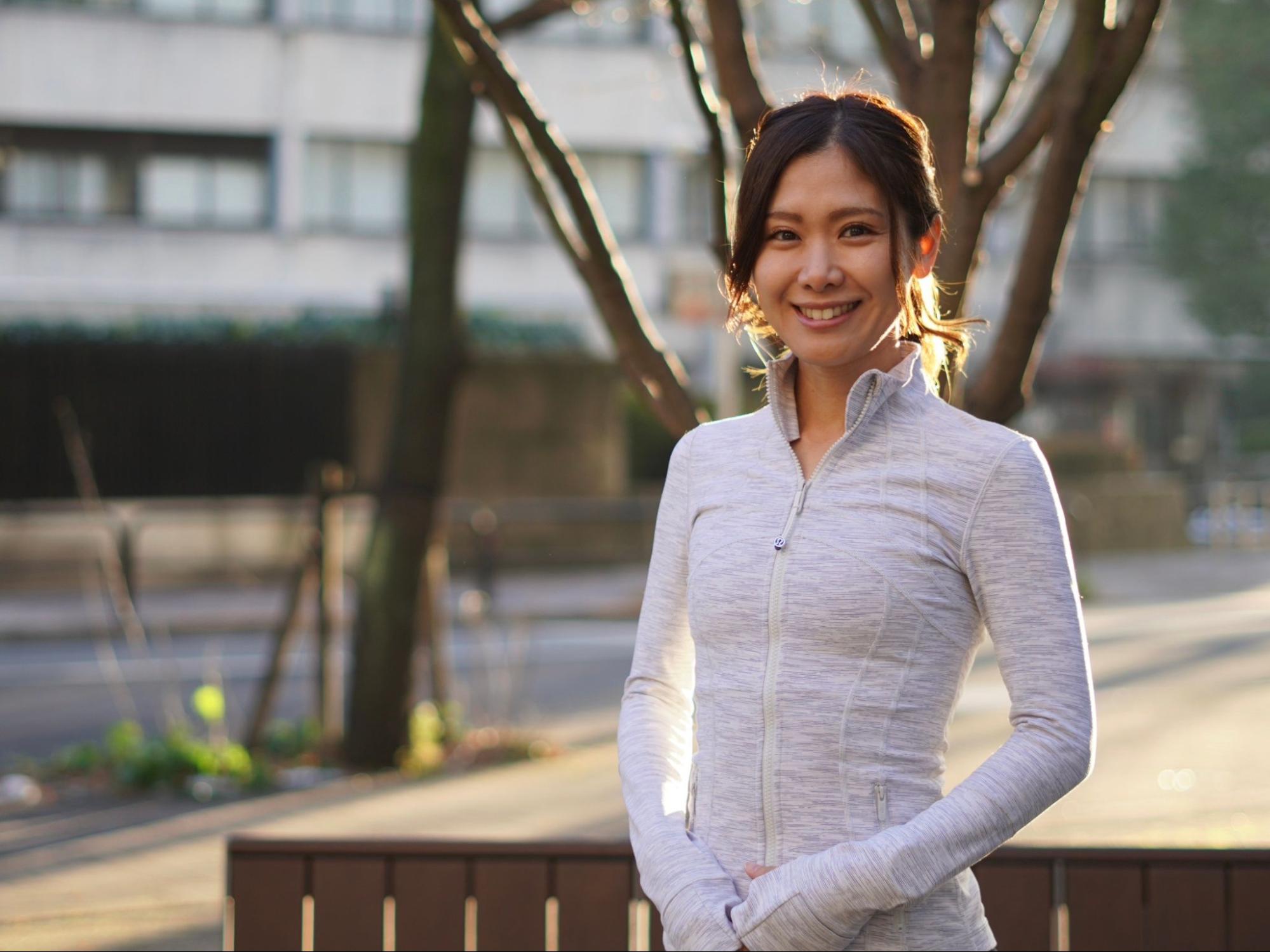
Since October 2022, Sayaka Ashino has been based at the running station Re.Ra.KuPRO Nagatacho RUNNING & CAFE near the Imperial Palace.
I came across this runstay because I wanted to continue activities that would connect people with each other, people with things, and people with places, and create a community space.
"The manager introduced me to this place, which is close to my office, has a cafe space, and is a place where I can socialize after my runs. I thought it would be the kind of place I wanted to create, a place where everyone could have fun, and a place where I could connect with people. Since the COVID-19 pandemic, the number of people using the place has decreased on weekday mornings, so I started it to liven up the running stations and Imperial Palace runs, but at first, no one came, and I was worried about what to do."

They use this place as their base to hold various events, such as bread runs and 70km runs, and their Instagram posts convey the fun they bring. The bread run, which was started by an individual eight years ago and launched in earnest in 2019, is a particularly popular event.
"I have weak internal organs and can't eat after a marathon, and even in an ultra marathon I couldn't eat anything after 70km, so I started bread running as a way to practice eating and running. I also check out breadstagrammers' posts and the internet every night as a hobby.
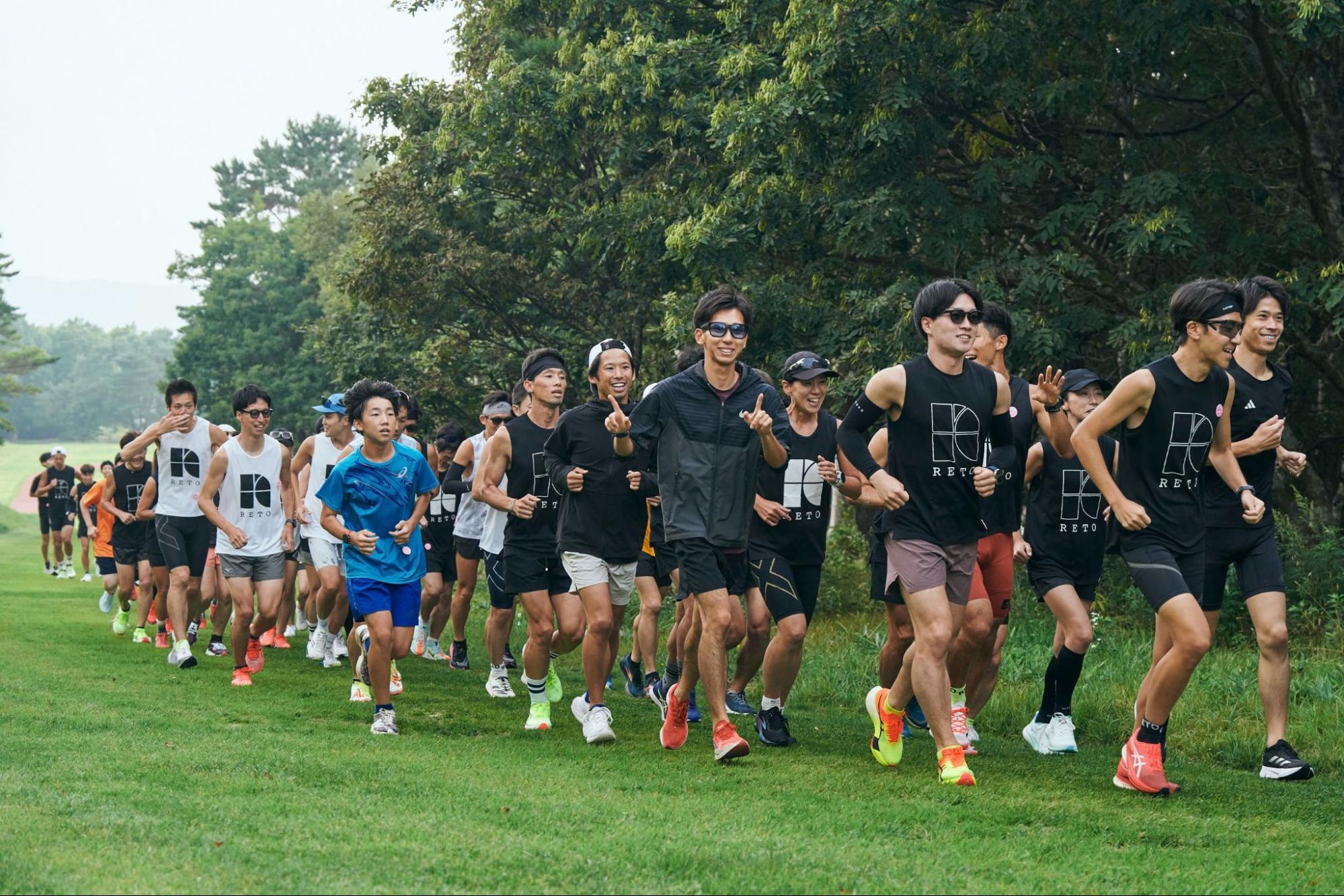
I want to communicate with all the participants and have fun, so the capacity is around 16 people. We run in pairs through the city, and the line changes from time to time so that everyone can communicate evenly. The course for weekend events changes each time, ranging from 5-6km to 70km, and for the 42km bread run, I designed the log to be shaped like a loaf of bread after it was over. I want as many people as possible to realize that 'eating bread and running can make you stronger' (laughs)."

Spreading the joy of running
Sayaka is a pioneer when it comes to bread runs, but recently there has been an increase in events that combine running and food, including bread runs. These events are on the rise because they are highly regarded as fun to run in, but Sayaka doesn't mind.
"It's not that I started it, but if the Pan Run becomes popular and people can enjoy running by combining pan and running, I would like to see it continue to grow. I feel like the Pan Run is my child and we're all helping to raise it, and that makes me really happy!"
But what about from a business perspective? If there is an increase in competition, the number of participants may decrease and it may become difficult to increase the number of events.
"I don't like the idea of just attracting customers. Competition means that we all work hard to make our events better, and if we can make various events more appealing, more people will participate, and more people will become interested in running. I would be happy if this could lead to more excitement in the running industry."

Sayaka organizes many running events, but not many practice sessions like those held by running teams or running clubs.
"Practice sessions are not the main focus because I am not an athletics coach and cannot provide instruction. What I want to do is not to convey the joy of running, to make connections, and to cheer on everyone's running.
It may be a bit of a hurdle for beginners to join a team and practice straight away, but if they can have a relaxed and enjoyable experience at my events and community, I think they'll find it easier to join other teams or participate in practice sessions.
I have no experience with sports, so I think this could be my gateway to running and serve as a bridge to other teams."

Decision to leave
Events were sold out, and I got more running-related work, such as brand modeling, guest runners, and trail and ultra training sessions. But as an office worker, running was only possible because of the company. In fact, I worked at the office from morning until after 9 PM, and after returning home, I would run until after 3 AM. If I continued living like this, my body would break down. With this in mind, around August of last year, I began to seriously consider my lifestyle.
"I've always wanted to do work that would make customers and staff smile, but my position at the company and the direction of my work were drifting away from what I really wanted to do... But at the running events I hosted, I could see everyone's smiles, and people told me that they had made individual connections through the community and were now able to go to other practice sessions and events. That made me happy, and I realized that that's what I wanted to do. You'll live a more comfortable life if you prioritize what you want to do. If it doesn't work out, I can just go back to my parents' house in Hokkaido. I just wanted to give it a try, so I jumped (from the stage at Kiyomizu Temple) (laughs)."

Although there were risks, such as a loss of income, Sayaka prioritized living her own life, so she quit her job in May of this year and began working as a freelance runner.
Then, I received some advice from those around me.
Up until now, I was working as a company employee and hadn't focused solely on running, so there hadn't been any particular problems. However, it seems that if you make running your full-time job, you may face various difficulties.
"I thought, 'Is that so?' but I just need to work honestly and honestly! I believe that it's up to me to turn a headwind into a tailwind! I want to steadily improve little by little. It's just like running a marathon (laughs)."

The joy and fun of cheering
Sayaka calls herself "the most fun cheering runner in Japan."
At last year's Shonan International Marathon, I was able to participate as a cheering runner with the Sayaka Bread Community. With Sayaka's participation, the number of people who entered increased, and we all felt happy to be able to run the race together and cheer each other on, which made the organizers happy as well. I hope to be able to do more work in this style.
"I would like to continue being a cheering runner. When I first started, I was so happy to have so many people cheering for me, so I would like to cheer on the runners at the venue.
Not only that, but even if I can't teach running techniques, I can support those who want to take on the challenge of ultramarathons by pulling them for 70km in training. I also participated in a support project for runners aiming to achieve a sub-four time as part of the 2024 Nagoya Women's Marathon. I was able to walk with them through the process of their efforts, worry with them, and be involved as a support runner, which was a very valuable experience. I'm excited to be able to do this again this season and support them as much as I can."

Looking at her Instagram account, she appears to be using both the names "Sayapan" and "Sayapi" effectively. Does she ever feel a gap between herself as "Sayaka" and the "Sayapi" she is known as, active as an influencer in the running industry?
"No (laughs). Sayaka, Sayapi, and Sayapan are all me, and I think that whatever I do is me. Of course, I am considerate and thoughtful during events, but I never act like myself, and I don't feel like I have to. Each of the me's is me, so I think I can enjoy whatever I do."

What it means for me to run
Now that she's freelance, Sayaka's range of activities will likely continue to expand. She's unwavering in what she likes and doesn't get involved in anything she thinks is wrong. She has 22,000 followers on Instagram, and with that level of popularity, manufacturers are sure to approach her for sponsorship. But Sayaka is far from that. Any restrictions on her activities or what she wants to do don't suit her way of life.
"I feel so lucky to have found something I'm willing to quit my job to do, something I can become so passionate about. Running is so much fun, it opens up the world so much, and it brightens my days. I'd be happy if as many people as possible could have the same experiences I was able to have thanks to the people I met. Also, someone like me who had nothing to be proud of has been able to do so many things. I hope that this can encourage someone, and that it will make them feel something. That's what running means to me now."