From Clumsy to Top Amateur Runner
Why I Run: Stories from Runners
Vol. 5 Mai Arituka Part 1
Text: Shun Sato

Days unrelated to exercise
She might be the strongest amateur runner.
Mai Arituka has a marathon time of 2 hours, 42 minutes, and 25 seconds, and she also runs ultramarathons. She participates as a guest in running events and races, and she paces runners during running practice sessions. When she runs on the road with her slender figure and ponytail, many people turn around and exclaim, "So fast!" and cheers of "Mai-saaan!" echo. Her powerful running style might make you think she has a strong track and field background, but she had absolutely no experience in track and field during her school days.
"In junior high, I was in the tennis club. I was in charge of court maintenance, so I got sunburned every day and was completely tanned. I really hated that, and honestly, I didn't even want to sweat (chuckles). I wasn't really interested in exercise to begin with, so I thought it would be better to stay in a cool place at home. I continued because I didn't want to quit halfway through, but those three years of junior high were painful. Because of that, I didn't join any clubs in high school and took calligraphy lessons, and in college, I worked part-time jobs every day. I lived a life completely unrelated to exercise."
After graduating from college, she joined a general company. She spent her days as a regular office worker, not particularly dedicated to anything.

Marathon challenge with less than 100km per month
Her start in running was in 2016, when a friend invited her.
"One day, a friend asked me, 'Do you want to run the Nagoya Women's Marathon as a memory? I thought you, Mai, might do it.' At first, I hesitated because I had never seriously exercised and was a slow runner. But at that time, I didn't have many friends I was in close contact with, so I was happy that she contacted me after a long time, and I thought 'if it's for making memories, why not?' so I decided to run."
Once she decided to do it, she, as someone with no track and field experience, didn't even know the distance of a full marathon. After looking it up, she found it was "42.195 km," but she couldn't imagine what that distance would be like.
"At that level, I had no sense of distance, so I thought I could run a marathon."
Her training started with 5 km, but the next day, her whole body was severely sore. The thought of running 42 km seemed daunting, but once she decided, she couldn't quit halfway. For three months until the race, she ran about three times a week in the evenings after work. She disliked getting sunburned. For long runs, she did one 30 km run and one 20 km run. Until Nagoya (March 2017), her monthly running distance was less than 100 km.
"Looking back now, I wonder how I managed to run a marathon with less than 100 km per month (chuckles). But unexpectedly, I ran it in 4 hours, 25 minutes, and 24 seconds. It wasn't tough. It was fun running with everyone, and since I ran faster than I expected, it was the first time I felt a sense of accomplishment in exercise (laughs)."
However, she took a short break from running at this point. Her friend stopped running after Nagoya, and Mai herself couldn't maintain the motivation to run alone.

The 3.5-hour barrier
A turning point came in November 2018 at the Osaka Marathon. Since her family home was in Osaka, she entered the race hoping her parents would see her run.
"This was my third marathon. I was determined to break 4 hours, and I beat my previous personal best of 3 hours, 59 minutes, 11 seconds from the Aoshima Taiheiyo Marathon, finishing in 3 hours, 50 minutes. People often tell me I'm 'strong-willed,' and sometimes that backfires, but I have a strong desire to always complete what I've decided to do. However, at that time, I felt like my time improved even though I hadn't trained much, so I thought I might get even faster with more training."
After achieving a sub-4 hour marathon, her times steadily improved. She rode that momentum to aim for a sub-3.5 hour marathon, but that's when she hit her first wall.
"I thought I was on a roll and could even break 30 minutes. But sub-3.5 was difficult. I aimed for it for one season and couldn't achieve it. However, I consistently trained, and I was quite optimistic, thinking that I would eventually be able to do it. So, when I finally cleared 3.5, the sense of accomplishment was huge."

Running to eat
During her junior high and high school years, she had a complex about sports.
Being good at ball games or being fast stood out, but she was far from that. She was also bad at mat exercises, vaulting, and handstands. She had an unathletic mindset, but the marathon she started as an adult has continued, and she has achieved her goals.
What was the reason she was able to continue running marathons?
"At first, having friends who could work hard together with me was a big factor. We'd eat sweets and delicious food, and then run while saying, 'We have to burn off what we ate' (laughs). I think I was able to continue because of that environment. After that, once I started aiming for better times, it was the practice sessions with my teammates. I think that environment really helped me grow."

Doesn't seek perfection in training
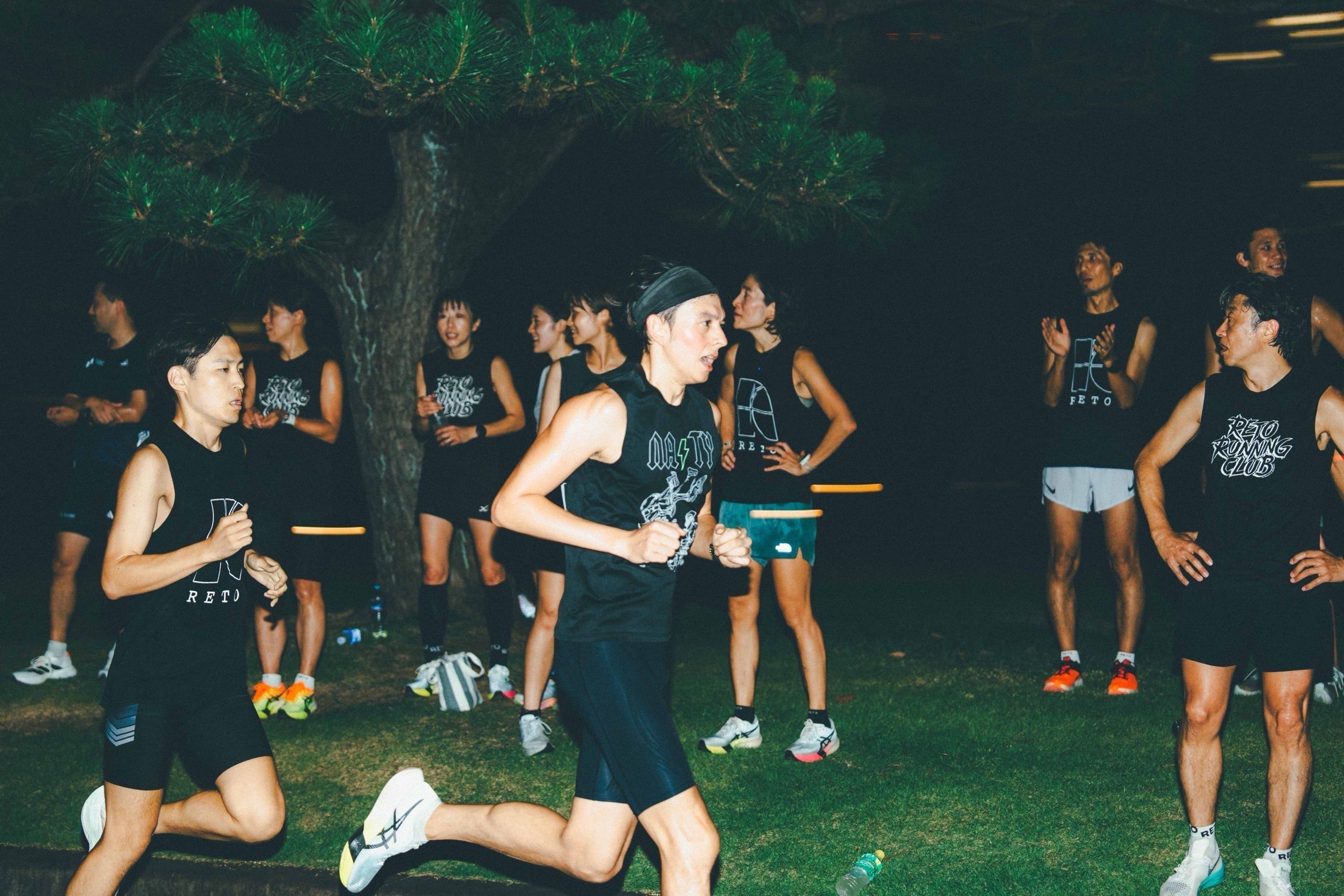
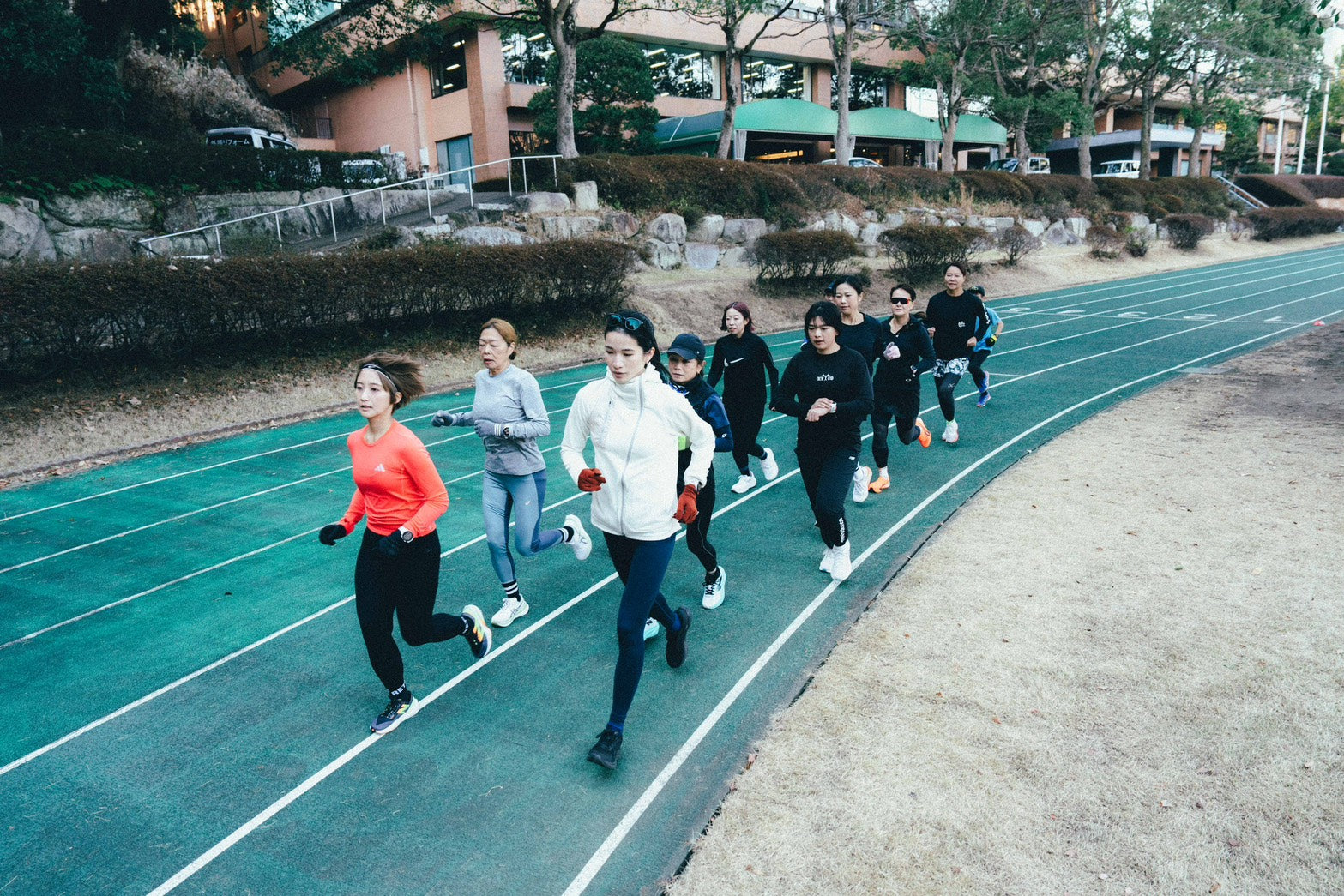
As she became able to run, she joined the Pacer Track Club and started training with her teammates at practice sessions. Running with a pacer pulling her along, she gradually felt her running ability improve.
"When I'm pacing, my mind is completely focused on the pace. But when I'm being paced, I can think about things other than pace, like how my legs feel, my breathing, or if anything hurts, and I feel motivated to keep up and push myself. For speed training, I can't even imagine running alone anymore."
She also likes to run in a group during races.
"In races, if someone from the same team is participating, I'll either join to match their pace, or they'll adjust to mine. Rather than running alone, I create an environment where I can run with someone. Since I'm tall, I often have men running behind me. There are fast female runners, but our stride lengths are different, so I don't find anyone whose rhythm matches mine. So, I inevitably end up running behind men."
If there are no male teammates, she tries to find a runner whose rhythm seems to match hers and runs with them.
"One reason I haven't been running the Nagoya Women's Marathon or Osaka International lately is that there are no men to run with me (laughs)."
She meticulously builds up her training, but she doesn't strive for perfection.
"I try to be meticulous and strict, but it's normal to have weeks where I couldn't do certain training, or days where I missed a key workout. Sometimes I can't even run at a pace I used to run comfortably. I don't get depressed if I can't perfectly complete things. If I can't do it, I just switch gears and move on, knowing there's nothing I can do about it."

Can't do anything but run
Has she ever wanted to take a break from running, gotten bored, or experienced setbacks, despite continuously running?
"I don't get bored of running. My passion for it never fades. I couldn't do other sports, and I can't do anything but run (laughs). People often ask me if my motivation ever drops when I run this much, or if I've ever experienced setbacks, but honestly, I haven't (laughs). It's frustrating when I don't get the time I want, but I've never once thought I didn't want to run anymore. Basically, after I eat and sleep, I don't let things drag on into the next day."

Teammates' praise
As if to prove she never gets bored, she participates in races and events every weekend, actively engaging in so many activities that she seems to have no time to rest. One might imagine her monthly running distance is on par with professional athletes, but...
"Not at all (chuckles). Monthly, it's about 350 km, around 90 km a week. I've only hit 500 km once. In my case, it feels like races are my training, rather than training for races."
It was when she challenged herself to a sub-3 hour marathon that Mai was recognized by those around her as a runner and became aware of her own running ability and potential as a runner. However, she aimed not just for sub-3, but for "Sub-Ega" (breaking 2 hours and 50 minutes) in the race.
"I was confident I could achieve not only sub-3, but also Sub-Ega. In the actual race, I was running at about a 4-minute per kilometer pace, and although I faltered at the end, I finished in 2 hours and 55 minutes. I wasn't satisfied with that and was very frustrated. But everyone told me, 'That's amazing!'... That's when I first thought, 'I can really run.'"
She achieved Sub-Ega at the 2022 Gunma Marathon (2 hours, 48 minutes, 25 seconds).
I can really run.
Since that thought, she has continued to run with that same belief.