Running is a very fulfilling hobby.
Why I Run: Stories from Runners
vol.5 Mai Arituka, Part 2
Text:Shun Sato

Personal Best After Consecutive Races
2 hours 42 minutes 25 seconds—.
This is Mai Arituka's personal best, achieved at the Seoul Marathon in March 2026. This race was actually the third in a series of consecutive races. Two weeks prior, she ran the Tokyo Marathon (2 hours 47 minutes 24 seconds), and one week prior, she ran a 10 km race in Seoul (won: 36 minutes 20 seconds). After returning to Japan once, she then traveled back to Seoul for the marathon. How did she spend those two weeks?
"In the week between the Tokyo Marathon and the 10 km race, I took four full days off. I didn't do any focused training; I just did a jog and some strides on one day, and that was it. After the 10 km race, leading up to the Seoul Marathon, I first took three full days off. On just one day, I did a build-up run. Even that was at 70% intensity, and then I traveled to Seoul."
Achieving a personal best in this sequence is probably why she's known as "the woman who never misses." Mai's strength lies in placing in many races and setting a new personal best every year. Why is she able to consistently produce results?
"When I first started running, my times improved quite quickly, but I think it becomes difficult to get results once you reach a certain level. I actually want to say things like, 'I want to shave off one or two minutes from now,' or 'I want to break 2 hours 40 minutes.' But if I say that, I feel compelled to do it, and I tend to push too hard and go at an overpace. That won't produce results, will it? In races, I always try to aim for 'a 1-second personal best'."
Even if she can improve by just one second, it's still a personal best. By focusing not on the overall time, but on that one second, she can avoid unnecessary pressure. Not pushing herself too hard and maintaining a calm mind likely leads to good performances.

Never Giving Up
She says there's another important thing.
"Although I seem to be running well, most of my races are failures (laughs). But I haven't had any long-term injuries, and I've been able to continue training. I believe that if I keep training, the time will eventually come, so I don't get too caught up in the highs and lows of a single race. Even if it's bad, I don't get depressed. I think that kind of mindset is important."
It's not always possible to have a race where you feel "this is it" from the start. Even at last year's Fukui Sakura Marathon, where she set a new personal best, she didn't feel like she was performing well until 40km, but she broke away in the last 1.5km. With the help of an acquaintance pulling her along, she ran at 3 minutes 20 seconds per kilometer and managed to shave 30 seconds off her personal best.
"Never give up until the very end. That's extremely important for achieving a good time."

Taking on Ultramarathons
While her main arena is the full marathon, she has recently started participating in ultramarathons. Last year, she won the Fuji Five Lakes 80km race. This year, she placed second in the Fuji Five Lakes 120km, achieving a sub-10 (9 hours 59 minutes 25 seconds), demonstrating not only speed but also strength.
"Ultramarathons are like a seasonal event for me. The scenery at Fuji Five Lakes is beautiful, and although I only participate in this one ultra race, for some reason, it suits me well. My legs get completely worn out, but I never have any major problems, and I always enjoy it. I plan to continue running just this ultramarathon in the future."

To Achieve Results
In addition to full marathons, she also competes in ultramarathons, and in between, she participates in events, half marathons, 10km, and 5km races. She runs almost every week, but where does all that stamina come from?
"I eat a lot of white rice (laughs). Some people lighten their meals because they think a lighter weight is better for running fast, but I'm more like, 'It's fine if I eat and gain weight.' I take supplements for zinc and iron that I can't get enough of from food. After all, you can't run if you don't eat, and running a full marathon consumes a lot of energy, so if you don't get enough nutrients, you won't recover from fatigue, and it can lead to injuries. I especially want women to eat properly."
Eat a lot and sleep well. Maintaining good health has always been about consistently doing simple things.

Pacer's Motivation
She serves as a pacer at practice sessions, but what was theきっかけ (trigger/reason) that led her to become a pacer?
"It all started when I became a pacer for the team of friends I began running with. I always felt bad that they were always leading me in my own training, so I started doing it if I could."
What is the reward of being a pacer?
"Pacing on time is good for my own training, as it helps me internalize the pace, but the biggest reward is when people smile and say, 'Thank you! That was a great practice session!' afterward. It makes me really happy, and that's what motivates me."
Being a pacer isn't just about running in front. While maintaining the target pace is a given, it also requires consideration for others, such as listening to the breathing of those running behind and offering words of encouragement. It's a job that demands empathy.
"When I pace, I pay attention to safety. It's really sad to get injured during practice, so especially during night practices, it's dark, so I'm conscious of running safely while watching out for steps and uneven ground. Another thing is that I try not to disrupt how each person approaches their training. Not everyone wants to be pushed hard and told 'Go! Go!' and I don't necessarily think pushing hard is always the right answer. I think it's important to tailor it to each person's goal. Beyond that, I always run while thinking about how I can make it as comfortable as possible for them."
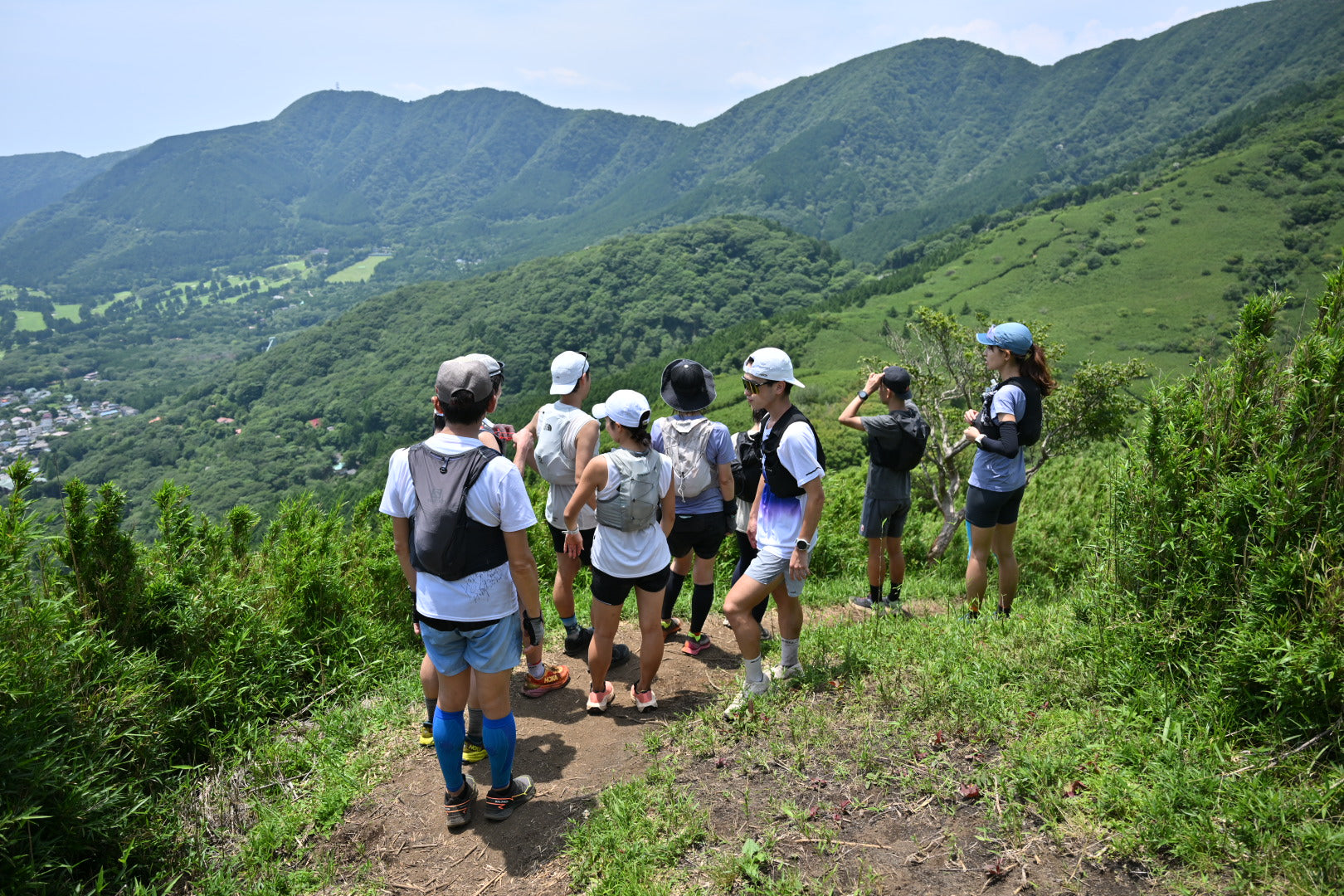
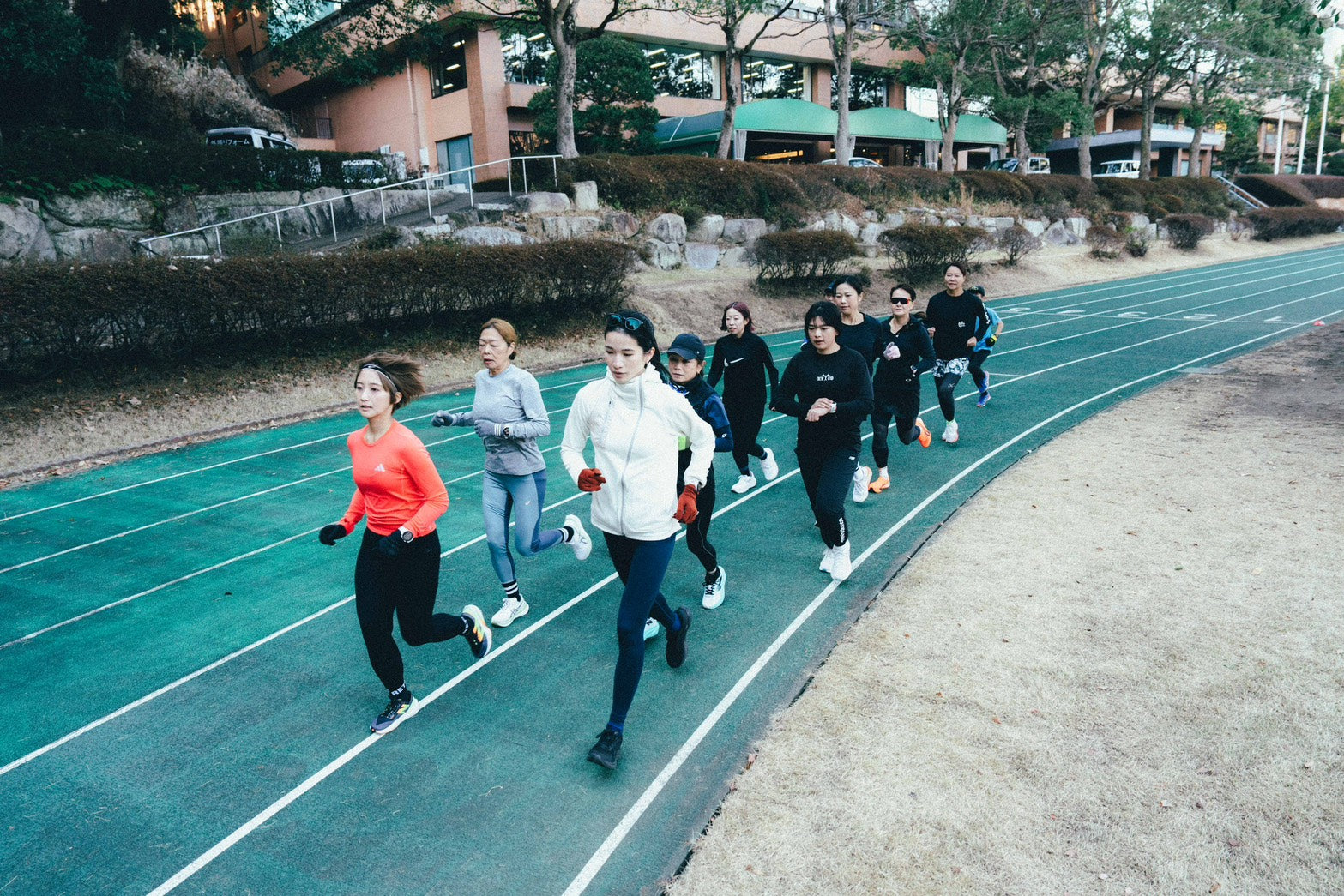
When she paces at RETO, there are often about 10 people in the group, and when she feels the difficulty while running, she uses her own experience to offer words of encouragement. The high evaluation that "Mai's pacing is easy to run with" is not just because her running rhythm is good, but also because she provides such thorough care.

The Strong Bonds Felt at RETO
She serves as a pacer for RETO's practice sessions twice a month, and has many opportunities to meet people at races and events. How does Mai see the RETO team?
"RETO has so many people, but everyone is incredibly close, I think (laughs). I often go to local races, and I've been quite surprised to see 'Oh, it's the RETO flag!' while running. When I ask, they say, 'We just came to cheer you on,' and I thought it was amazing that they would come just to support their teammates, even though they're not family. When I started running, I wished RETO had existed; I would have wanted to join."

Running with a Job
Mai is not a running influencer.
Although it wouldn't be surprising if she were, given that she posts pictures of herself running almost every week on Instagram, she still works for a general company. It seems like she could quit her office job and become an influencer, but she says she's not interested in that.
"I work in a field completely unrelated to running, but I actually think that's a good thing. If my job were related to running, I might constantly think about it, feel pressured to achieve results, and my motivation might even decrease. But because I have a job, I can switch between 'on' and 'off' for running. I think that's why I'm still able to enjoy running today."

Why do you run?
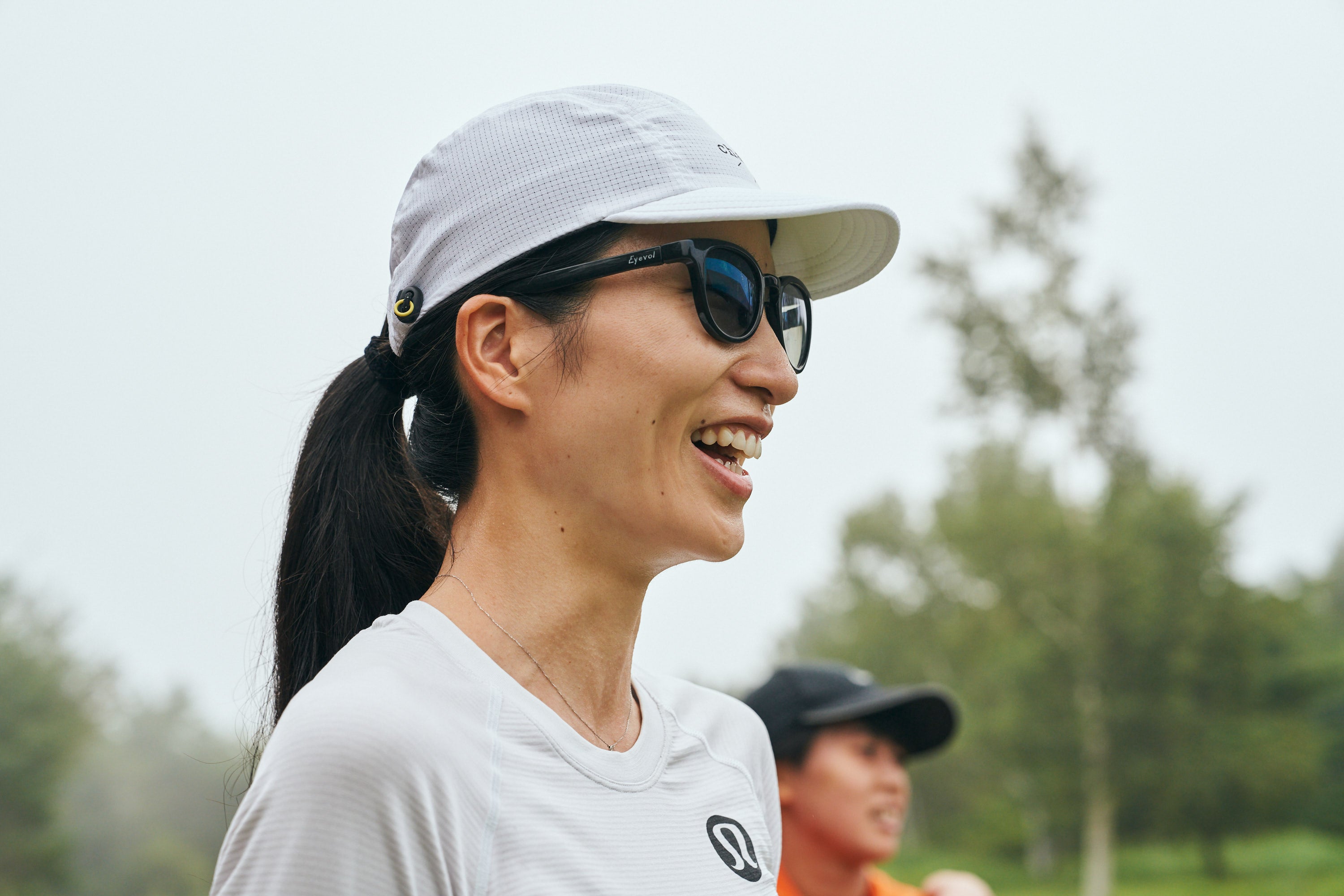
"Because I love running. It's nothing more or less than that; I simply want to do what I love, and that's running. Before I discovered running in my life, I didn't really have any hobbies, but it's been 10 years now, so I think it's a wonderfully fulfilling hobby (laughs)."