Ankle sprains are a common and troublesome injury for runners. What is the correct way to treat them?
Text: shun sato

Ankle sprains should not be taken lightly
Ankle sprains are probably the most common and troublesome injury for runners.
The reason it's "troublesome" is because it seems like it would be easy to cure, but in reality it isn't.
Since many people have experienced sprains, it is common for them to treat the ankle on their own judgment, without relying on an orthopedic surgeon. They apply ice, compresses, or immobilize the ankle, and once the swelling goes down, they'll be able to run again. So, they make their own judgment and start running. However, this often ends up making the injury worse. When this happens, a prolonged recovery is unavoidable. Regretting "I should have stopped then" or "I should have been more careful" is no longer worthwhile, and they end up spending their days in frustration while their teammates and friends improve their running ability.
"Don't take ankle sprains lightly"
That's what physical trainer Shuichi Nakano James said.
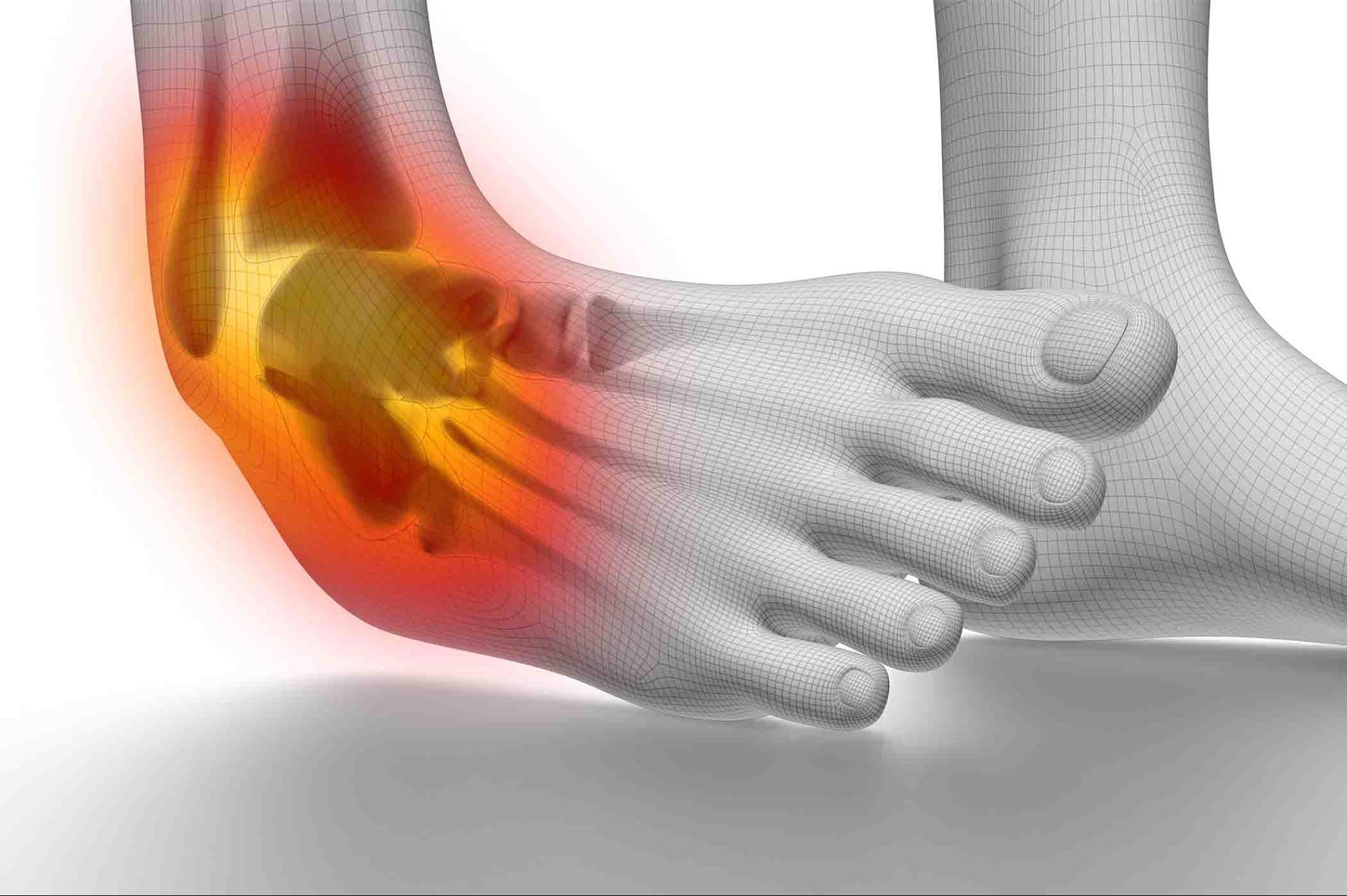
"An ankle sprain is damage to the ligaments in the foot. A pulled or torn muscle is muscle damage, but because there are many blood vessels passing through the ankle, the materials needed for repair are carried through the blood vessels, so to be honest, it will heal on its own. However, when the ligaments or cartilage tissue are damaged, as in an ankle sprain, it is difficult for it to heal on its own."
Sprains are divided into three types depending on the degree of damage to the ligaments.
Damage to the ligament that is only stretched is defined as stage 1, damage to the ligament that is partially torn is defined as stage 2, and damage to the ligament that is completely torn is defined as stage 3.
 Shuichi Nakano, a lecturer at RETO RUNNING CLUB
Ryuji Nagata, a member of the RETORUNNINGCLUB, sprained his right ankle while running home last October. At first, he applied a compress and rested, but after a week the swelling subsided and he was able to start running again.
"I once sprained my ankle, and I had the image of taking a short break before starting again, so I thought that if I took a short break I'd be able to run again. In fact, after a week of rest, I ran 20 kilometers and was able to run. However, the next day it got much worse."
I also sprained my right ankle last December and started running again after taking a week off. Like Nagata, I decided when to resume running based on my experience with past sprains, knowing that I could run again after roughly this amount of rest. This is a common judgment that most people tend to make.
Self-diagnosis and early resumption of running
Nakano says that one of the factors that makes things worse is self-judgment based on experience.
"I think everyone has sprained their ankle once or twice as a child. When we're children, we recover quickly, and our experience of how long it took to recover from a sprain of this magnitude and how long it took to heal creates a standard for when we should return to playing. However, when we injure ourselves as adults, the older we get, the slower it takes to heal, and because it's ligament damage, it's difficult to heal in the first place. Nevertheless, once the pain goes away, we continue running, which ends up injuring it again. If we repeat this, we develop a habit of spraining our ankles, and they become more susceptible to recurrence."
A week after the pain returned, Nagata went to the hospital and was diagnosed with a stage 3 sprain, with a three-month recovery period. His feelings matched the doctor's diagnosis, so he felt a bit relieved, but also sad that he had to give up the marathon just one month away. From there, he incorporated explosive power, endurance, and cardiopulmonary function into his training program to maintain and improve his physical function without putting too much strain on his legs. He continued this training for two months during his no-run period, with weight training for explosive power, walking for endurance, and exercise bike training for cardiopulmonary function.
"I tried not to look at apps that shared my teammates' training schedules too much, so as not to accumulate stress. I also made sure to think carefully about what I ate so as not to gain weight, and made sure I got plenty of sleep."
On the other hand, I started running again one week after the injury. I had swelling around my ankle, but it wasn't as painful as Nagata's, and I had a race I was aiming for, so I continued running with ice on it. However, during the race (Beyond in December 2022), the pain exploded, and I had to withdraw. A subsequent diagnosis indicated that it would take two and a half months to heal. This was the result of overconfidence, thinking I could run even with swelling.
 Nagata dealt with the situation in a planned manner and resumed running
Nakano says that when injured, "the best thing to do is to rest for a while."
From that perspective, Nagata's response of being told he needed three months to recover, and then spending two months without a race, was exemplary. However, being unable to run for two months, he forgot how he used to move when he was in good condition, and was overcome with the feeling that his body no longer belonged to him. Nevertheless, about three months later, just before the Hi-Tech Half Marathon in January of this year, his condition improved. He was able to control his ankle as he wanted, and he had fully recovered enough to be able to do key training at high speeds, and he even set a new personal best in the race. Up until then, the doctor's predictions had been met exactly in those three months.
In my case, I hadn't run since the race (Beyond), but because of the Tokyo Marathon, I resumed running on just the 11th day. Because I was betting on the Tokyo Marathon, I continued to struggle with pain and baseball-sized swelling, and in February, as a last resort, I started going to acupuncture every week. Nakano says, "If pain and swelling occur when you first start running, you shouldn't be running in the first place, so you're out," and he was right. In the end, I was unable to run again.
In April, I was referred to Dr. Torii (Sagami Rinkan Hospital) and had him examine me, and after receiving an intra-articular injection, his condition improved. It took about six months from the deterioration at Beyond (December 29, 2022) until I was able to resume full-scale training at the RETORUNNINGCLUB training session in June.
The difference in recovery time between Nagata and myself may be due to differences in age and individual differences, but it all comes down to the approach we took after our diagnosis. Nagata gave up his target race and followed the doctor's advice to maintain a Nolan finish, while I used acupuncture to relieve my pain and clung to the Tokyo Marathon. It could be said that the difference in how we responded after our injury made the difference between our success and failure in our return.
 I pushed myself too hard and had to drop out of the race due to the pain. (Author)
Correct measures to take when spraining an ankle
Nakano says:
"The most effective way to treat a sprain is to treat it as quickly as possible when it occurs. Simply put, whether or not you can apply ice at the time makes a big difference in the time it takes to recover. Next, don't make self-diagnosis based on past experience. Your first priority should be to go to an orthopedic surgeon who will take proper images of the affected area and examine you. It's important to get advice from the doctor while looking at the images. Some people go for massages or acupuncture, but it's important to go to an orthopedic surgeon first and understand what your condition is."
 It is important to apply icing as soon as possible.
The doctor will tell you the extent of your injury and the approximate time it will take to heal. I say "approximate" because, as mentioned above, it varies from person to person.
After the examination, it becomes a battle with myself.
A sprain doesn't look the same every day, but rather changes the expression of pain depending on the day. During the two months of Nolan, Nagata sometimes felt different pain in the morning and at night. At times like these, he hears the devil whispering in his calm mind, "Maybe I can run?", but if he gets carried away and runs, it will all be ruined.
"The most important thing after a sprain, through rehabilitation, and until you return to running is patience. More specifically, patience before the pain goes away and you start running again. If you wait a while after a sprain, the pain will subside, and you'll think you can run again. If you can't bear it and start running, it will prolong your recovery, so I want to tell everyone that patience is important," says Nakano.
Nagata also said, "I understand very well that patience is important." During rehabilitation, the pain disappeared and he thought he was cured, but after running about 5 kilometers, the pain suddenly returned and he went back to his usual training. This happened several times, and he learned the importance of patience.
After receiving an injection in the affected area, I began training cautiously, almost to the point of timidity. I suppressed my desire to run faster and longer, and continued my rehabilitation by following the program as instructed. However, the five-month gap was significant, and my running ability has yet to return.
--The correct response after a sprain or injury--
- Immediately after the injury, apply ice
- Seek the doctor's opinion
- Rest for a period of time
- Patience during rehabilitation
There is no magic treatment or cure for an ankle sprain, so the key to a speedy recovery is to wait a while, follow the doctor's instructions carefully, and work diligently on rehabilitation.