Okayama Marathon 2025 ~ Emergency Lifesaving Scene ~
RRC member interview
Text: Shun Sato

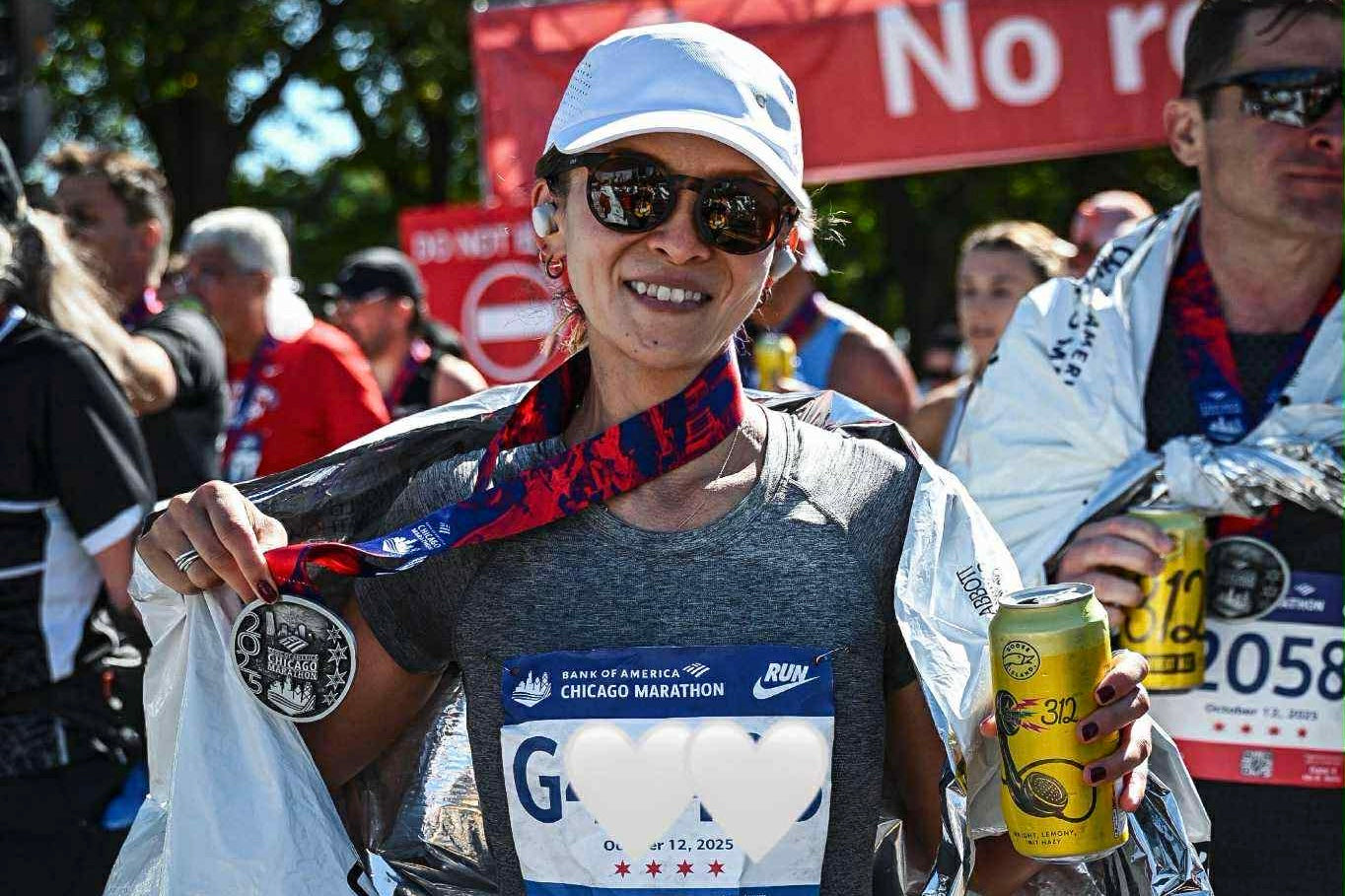
A life saved by a split-second decision - Kumi Kamiya
An emergency occurred on the last track
"Enter the stadium, go around it once and it's over."
With this in mind, Kumi Kamiya, a runner in the Okayama Marathon 2025, mustered her final strength and headed to the Okayama Prefectural General Ground Athletics Stadium. She was almost certain to beat her personal best, and although her legs were tired and heavy, she felt light-hearted.
It was when I entered the stadium and onto the track.
A man was lying on the ground and a nearby runner was calling for help.
Kamiya immediately realized that it was an emergency situation, and told Yohei Nariai, who was running with him as a pacer, "I'll go," and headed toward the fallen man.

Cardiac arrest: Every second counts
The man had collapsed, his eyes rolled up, and foam coming out of his mouth. He had no pulse and was in cardiac arrest. Cardiac arrest is a condition in which the heart quivers and stops pumping, preventing it from pumping blood normally. If this continues, the heart will stop beating completely and will not move again.
"We need to revive him as quickly as possible."
Seeing that the man was in a dangerous condition, Kamiya told the student volunteers who rushed to the scene, "Please use an AED." Meanwhile, a female volunteer was performing CPR (chest compressions), but she appeared to be inexperienced. Kamiya, a nurse, has experience performing CPR, but has mostly performed it on elderly, thin people, and has never performed it on a well-built person like the man who had collapsed.
"I wondered if I could do it, but I had no choice but to do it."
He took over from the volunteer and began administering cardiac massage.

Life-saving cardiac massage
This type of cardiac massage may look simple, but it actually requires a lot of physical strength. You place the heels of both hands together and press them down to reach the heart, repeating the massage at a rate of 100 to 120 times per minute. Furthermore, you must keep your hands on the chest while performing the repeated compressions.
Having run a full marathon, Kamiya was already exhausted and thought it would be difficult to continue. Just then, a male runner watching next to him volunteered to take over and continued the CPR.

Lives saved
The AED arrived, I attached it as instructed and pressed the button.
An AED is an "Automated External Defibrillator," a "specially controlled medical device." It delivers an electric shock to restore a spasming heart to normal, but if this is delayed, the heart will no longer be able to pump blood, and the chances of survival will decrease over time.
An AED was used and cardiac massage continued.
The man's name was written above his bib number, and people around him desperately called out his name.
"Mr. OO, come back!!" "Mr. OO, everyone is waiting for you."
Everyone around him kept calling out to him, and with a relay of lifesaving treatments, the man finally regained consciousness. After resuscitation, an ambulance arrived, and Kamiya carefully explained the man's condition to the paramedics. The man was carried on a stretcher and rushed to the hospital.
Kamiya said he was relieved when he received a call from the Okayama Marathon secretariat later.

Proper care and luck
"I was glad that the patient survived. I used to work in a surgical ward, so I was used to seeing sudden changes in patients' conditions and other irregular situations, but it was my first time to encounter and treat a life-or-death situation during a full marathon. Thinking about it now, it's scary, so I'm glad I was able to do well."
The man's survival was due to both proper treatment and luck.
"It was a blessing in disguise that he collapsed inside the stadium. There were many volunteers and an AED was available, so we were able to provide the necessary treatment. If this had happened on an empty road, or in the mountains (I also do trails), it would probably have been much more difficult."
In marathons, doctors and medical personnel often run as runners or ride bicycles to keep an eye out for any unforeseen incidents, and the Okayama Marathon also had a team of 800 people, including AED teams, doctors, and first aid teams.

As a medical runner
It is because they are watching over our safety and health that we can run a marathon with peace of mind, and Kamiya had the opportunity to serve as a medical runner for the first time at the Hokkaido Marathon in August of this year.
"Because it's so hot in the Hokkaido Marathon, I didn't think I was aiming for a good time. But I wanted to experience the Hokkaido Marathon, so I thought I'd run as a medical runner, which would allow me to make use of my job. I applied to be a medical runner, hoping to help runners suffering from heatstroke and dehydration, and also as a way to create some memories."
A medical runner is a person who is qualified as a doctor, nurse, licensed practical nurse, or paramedic, and who will provide initial response and emergency treatment if they encounter a serious health issue with another runner during the race.

Medical Runner's Job
In the case of the Hokkaido Marathon, medical runners wear bibs with red letters that say "Medical Support Runner" and generally run alone.
"Normally, when you run a marathon, you don't look around as you go, but in the medical section, you run while constantly looking around to see if anyone has stopped, collapsed, or looks unwell. The temperature and humidity at the Hokkaido Marathon was high, so many people had stopped or were sitting down because they had cramps, and I called out to them, asking, 'Are you OK?' I left when I heard the other person say, 'I'm OK,' but I thought that a summer marathon was pretty tough."
Along the way, I came across a man who seemed conscious but unable to move. He said he was fine, but a bicycle medical team came by going the other way, so I told them, "There's a man lying on the ground at this point, so I'd appreciate it if you could take a look at him." This kind of coordination among medical teams is extremely important, as they cover a wide area of 42 kilometers. However, there are some parts of the road that are deserted and without much to see.
"It would be nice to be in a place where there are a lot of people or where you can see aid stations, but there are some places where there is absolutely nothing. It's a bit scary to see people sitting or lying down in those places, and I couldn't just leave them there, so I intended to stop. Fortunately, nothing like that happened, so I was glad that I was able to finish safely. However, I was constantly looking around while running, so it wasn't my legs that were tired, but my neck (wry smile)."

My personal best was in Nagoya
Kamiya currently works at a visiting nurse station. It's tough work, with 24-hour standby times, but it saves and helps save lives. In between, she finds time to run, aiming for a personal best in the Okayama Marathon.
"My first choice is next year's Nagoya Marathon. I wanted to break 3:75, so I asked Yohei to pace me in the Okayama marathon before that, hoping to set a personal best. Although I didn't achieve my personal best, I was able to use my job to help one person. It was a race I'll probably remember for the rest of my life. However, I never thought something like this would happen, so it made me realize once again that anything can happen at any time and in any place in a marathon."
When I posted about that incident on social media, I received a variety of responses, such as, "If it were me, I would go back and help after he reached the goal," and "There's nothing I could do, so I would leave it to someone else."
"I realized that there are many different ways of thinking. In my case, I acted spontaneously rather than thinking about it on the spot, so I was surprised at myself."
A normal person might be worried but just pass by, but the reason he was able to act was because of his strong sense of mission and responsibility as a medical professional.

A memorable Okayama Marathon
After seeing the man off, Kamiya ran one lap around the track with Nariie and the man who rescued him, and then crossed the finish line. While his personal best wasn't forthcoming, he was able to provide first aid and contribute to saving a life. It was a 42.195km race that he can be proud of both as a runner and as a person.