Experience gained as an official pacer
Official pacer for the 15th Iwaki Sunshine Marathon
Text: Shun Sato

RRC approached about hiring a pacer
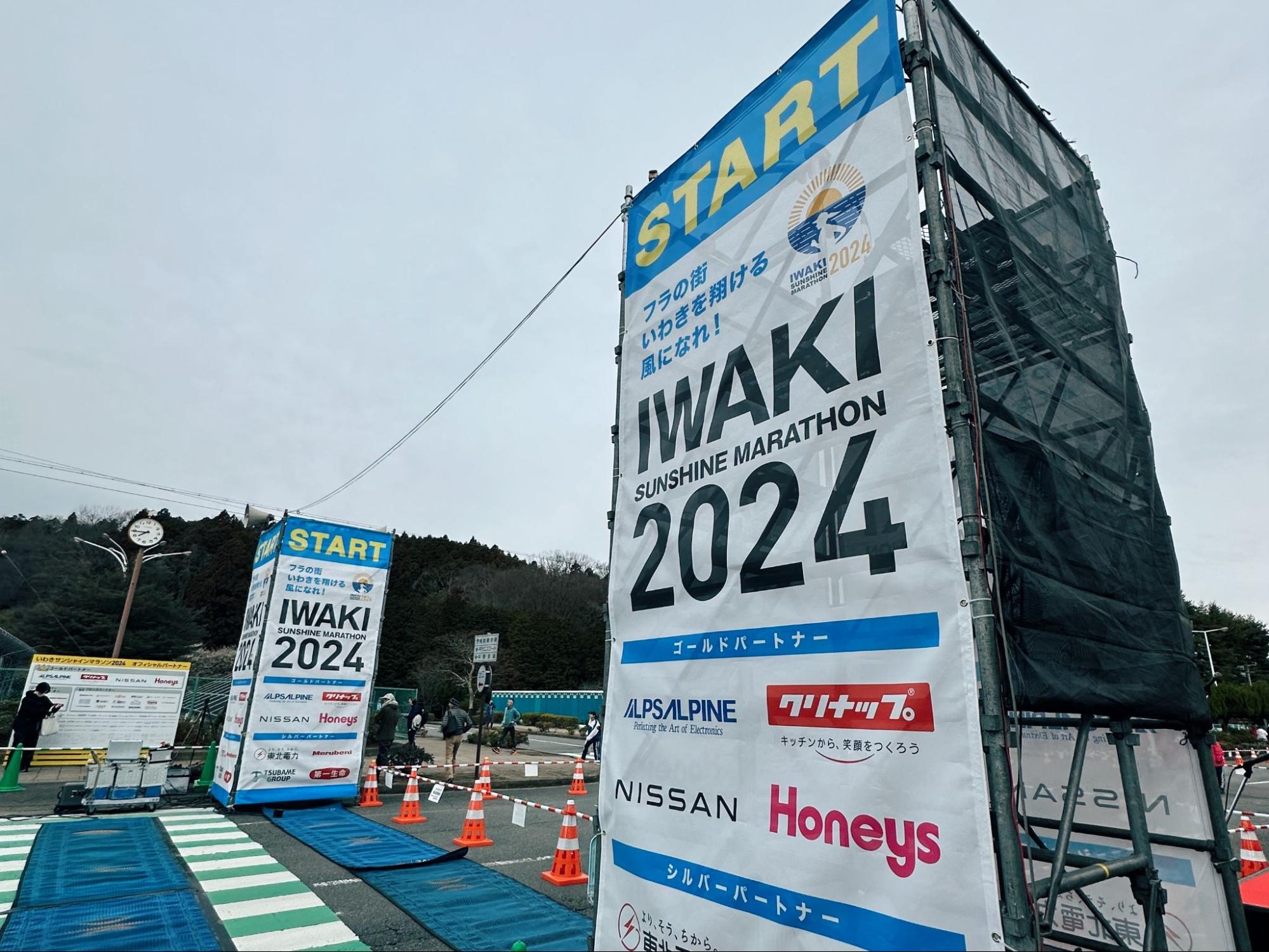
The 15th Iwaki Sunshine Marathon was held on February 25, 2024.
A total of 5,358 runners took part in the race, with 2,000 staff and volunteers and many people watching from the sidelines, and the pacers for this race were the RETO RUNNING CLUB.
It all started when the tournament organizer approached Takagi Seiya, a coach at RETO RUNNING CLUB.
"I was acquainted with the person in charge of organizing the tournament, and when we were discussing what RRC could do, the topic of a pacer making a mistake at the previous year's tournament came up. As organizers, we couldn't allow the same mistake this time. That's when they asked if I would be willing to cooperate as a pacer."

Should I accept a pacer?
The tournament was scheduled for Sunday, February 25th.
The race day overlapped with the Osaka Marathon, one week before the Tokyo Marathon, and two weeks before the Nagoya Women's Marathon. RRC's team policy is to achieve each member's goals, and many members had entered these races.
"I wondered whether it was really appropriate for me to take on the role of pacer at a time when it might have a negative impact on the individual members' achievement of their goals. However, while we are all working hard to achieve our individual goals, we also have a culture of supporting each other in achieving their own goals. Members often say, 'Since joining RRC, I've come to think of marathons as a team sport.' I thought that the role of pacer, which supports the many runners participating in the event in achieving their goals, would naturally make use of the strengths of RRC and be meaningful."

Eight pacers raised their hands
After accepting the offer, the RRC called for pacers. In the end, the sub-3 time was awarded to Coach Takagi, the sub-3.5 times to Kei Niinuma and Masaru Ogura, the sub-4 times to Osamu Nakamura and Hisakazu Hirano, the sub-5 times to Yohei Nariie and Toshiya Miki, and the sub-6 time to Misook Kim.
"I was ultimately responsible for deciding on the pace setting. The most difficult part was getting under six minutes. The RRC members don't usually run at that pace, so it was difficult for them to lead the race. What's more, they apparently made a mistake in setting the pace in the previous year's competition. I'm sure it was difficult for Kim, who was in charge of setting the pace, but he made meticulous preparations, including drawing up a detailed time schedule in advance."

Defeating the 8km checkpoint
Kim, who was assigned as the pacer for the sub-6 marathon, explained his motivation for applying:
"In 2020, I had surgery to remove a benign tumor from my right breast, but it came back during a health check last year. It didn't recur, but it was inflamed and depending on the next follow-up, I might not be able to run anymore, so I applied to try out a few different things while I could. However, I'm a slow runner, so I thought, 'I probably won't be selected.' Then I got a call from Seiya, which made me happy, but I was also quite worried because I was the only person in charge of the sub-6 marathon."
His biggest worry was how to clear the five checkpoints, including the 8km mark. To that end, Kim wrote down his lap times for each kilometer and the rest times at aid stations, putting them in a plastic bag before setting off.

"I prepared a lot of things, but for people who can run under six, all they need is the checkpoint closing times, they don't need lap times for each kilometer. Anyway, I was worried about the first eight kilometer checkpoint, so I followed the people who were at the very end and ran after them, shouting out, 'How many minutes are left?'"
In the second half of the race, more people started walking, and there was no food or other energy available at the aid stations. Kim handed out gels and tablets that she had brought with her to the runners, and offered Komrocare jelly to those who had cramps in their legs on the slopes. She acted more like a nurse than a pacer.
"At the end, people said things like, 'You were a little too fast,' but I was relieved to have managed to finish the race. When I crossed the finish line, the organizer was happy and said, 'I'm glad everyone finished on time. Thank you very much,' (laughs). It's not often that you get thanked for running a marathon, but I received so many words of gratitude, and I was happy to receive such generous treatment, with drinks and fish ball soup provided. However, being the only pacer is tough. You can't even go to the bathroom, and you can't respond if an accident occurs. No matter how slow you are, the responsibility is the same whether you go sub-3 or sub-6."

The reason I came to Iwaki
Nariai, who is in charge of the sub-5 marathon, explained his motivation for applying to be a pacer:
"I applied this time because I wanted to try being a pacer in an official race and I was attracted to the idea of going to a rural area with my RETO friends. It was my first time as a pacer, but I ran alongside Nana (Nozaki Nanako) in Tsukuba and made some great memories, and when I ran at Shonan International while cheering on the runners, I realized that a marathon isn't just about setting a record; it can also be fun to cheer on and support the runners."
Nariai's current goal for a sub-3.5 pace is 4 minutes 57 seconds, and the sub-5 pace that a pacer needs is around 7 minutes 6 seconds. Before the race, he tried a sub-5 pace test run at the Imperial Palace, but it was too slow for him to run, and even at a slow pace he managed 6 minutes 45 seconds.
"I thought it would be difficult to complete 42 kilometers, but when I considered the water and food at the aid stations, I felt I could do it. Also, Kim had set the pace and other details in great detail, so I thought that this might be a problem, and set my own the day before. However, when I actually ran, I found that with a sub-5 time, there were hardly any people sticking closely behind the pacer like in the sub-3 and sub-3.5 times. So I didn't want to just run monotonously, so I made sure to high-five people along the road and create an environment where I could enjoy running."

After the 30km mark, some runners began to worry about whether they were keeping within the time limit, and those running nearby began to fall behind. Instead of leading the pack to the finish line, Nariai let fellow sub-5 pacer Miki take the lead, and he picked up the runners who had fallen behind and pushed them to the finish line within the time limit.
"After Mikity (Miki) crossed the finish line ahead of me, I waited around the last corner and greeted all the runners, high-fiving them. In the end, only about 20 people followed me, but I was relieved to be able to see them to the finish line. The toughest part was when I had run for about two hours. When I realized I still had three hours left, I felt hopeless (laughs). Running at a pace that was not optimal for me was a whole different kind of toughness from running a normal marathon."
 Miki, who served as pacer alongside Nariai
When he reached the finish line, he received words of gratitude from many runners, such as, "Thank you for calling out to me at the end."
"It was tough, but I'm glad I did it. When I was pacing, Fumiya (Kaneko) told me, 'It'll be fun for the people of Waki if they can run around Yohei,' and that was always in my mind. Maintaining the pace is the most important thing, but as a pacer, I hope I can give energy to those around me and convey the fun. I thought that if I could do that, then it would have been worth coming to Iwaki, so when I saw everyone's expressions, I felt like I'd done a little."

A pacer who uses his head and mind
Niinuma served as the pacer for the sub-3.5 time.
"I volunteered to be a pacer because it was the first time I had been able to go on an expedition with the organizers covering the expenses, and I thought it would be fun to run as an official pacer for a competition as a RETO. Last November I paced Eri (Matsuzawa Eriko), and it felt like a team sport, which was really fun. After it was over, I was thanked and felt like I had done something truly good, so I hope there will be another opportunity."
Before the start, I realized how difficult it would be to run as an official pacer for the event. Supporting a select group of team members who I regularly run with is a completely different job from leading a large group of people I've just met on a course I've never run before.
"If you run together all the time, you can tell if someone is good at downhill or not so good at uphill, and you can tell their condition and how they're feeling by their breathing. But when you're leading a group, you can't cater to each person's needs, so you have to create a pace that's easy for everyone to run at, which required a lot of thought and attention."

Fellow pacer Masaru Ogura said, "I hate to lose, so I want to pull away (laughs)," so I told him, "This isn't a competition, I'm a pacer," and told him not to get ahead. He had to keep the pace while also watching Ogura's movements, and he felt the difficulty of working together as a team.
"The pace itself was simple, just under 25 minutes for 5 kilometers, so I decided to slow down on the uphill sections and pick up on the downhill sections to create a good balance. There was a fairly large group behind me, but the group gradually narrowed, and on the final slope Marcy (Ogura Masaru) suddenly became energetic and tried to get ahead, so I stopped him, saying, 'I've built up some time to spare, so it's okay not to go too fast,' but in reality it was me who was struggling. Marcy was like a wild boar until the very end (laughs)."

Abandoned Tokyo Marathon
In the end, I crossed the finish line carrying about 20 to 30 other runners.
"Honestly, my left leg wasn't feeling well, so I thought about dropping away around the 30km mark. But at the end I was able to set a good pace, and many people followed me. Everyone was happy for me, saying, 'Thanks to you, I was able to finish under 3:30.' I felt half relieved, and half glad that I had finished."
In fact, Niinuma had the Tokyo Marathon scheduled for a week later, which he had decided would be his biggest challenge. However, after this race, he decided to withdraw from the Tokyo marathon, which he had been aiming for.

"I ran the Hamamatsu Half Marathon a week before Iwaki, and at that point my legs were hurting, so I thought that even if I could run, it would either be Iwaki or Tokyo. The situation was such that it would be difficult to achieve my goal of a sub-3 marathon, and I had accepted the job of pacer for the team, so it didn't feel right to skip that and run in Tokyo just to set my own record. In the end, it was a decision I was comfortable with, so I have no regrets about running Iwaki."
Niinuma said that if he had the opportunity to act as a pacer in another marathon, he would like to participate again.
"RETO's team policy is to aim for a personal best, but I think that if you keep doing that, you might hit a dead end. When your own time just won't improve, I hope that you can experience the fun and excitement of leading others as a pacer and use that experience to improve your own running."

Nakamura and Hirano, who served as pacers for the sub-four marathon
What the pacer's experience brings
After the event, the organizers sent words of thanks to the pacers and the RRC. Takagi smiled and said that the team had fulfilled their first role as pacer, and that the team had gained another skill.
"This was the first time for all of us to serve as official pacers at a competition, so I think there was some anxiety. But the RRC members understand how difficult it is to achieve a goal and the joy that comes with achieving it, so they took on the role with a sense of responsibility. I also think they realised how important the role of a pacer is. We still have a culture of members supporting each other, but I think this will be an opportunity to make that feeling even stronger."
RRC has a strong cheering culture, and pacers are included in that in a broad sense. Considering the team slogan, "Enrich your life through running," running not just for yourself, but for others as a pacer is a factor in making that happen. There will likely be more opportunities in the future, and if you take advantage of them, your happiness in running will increase.