
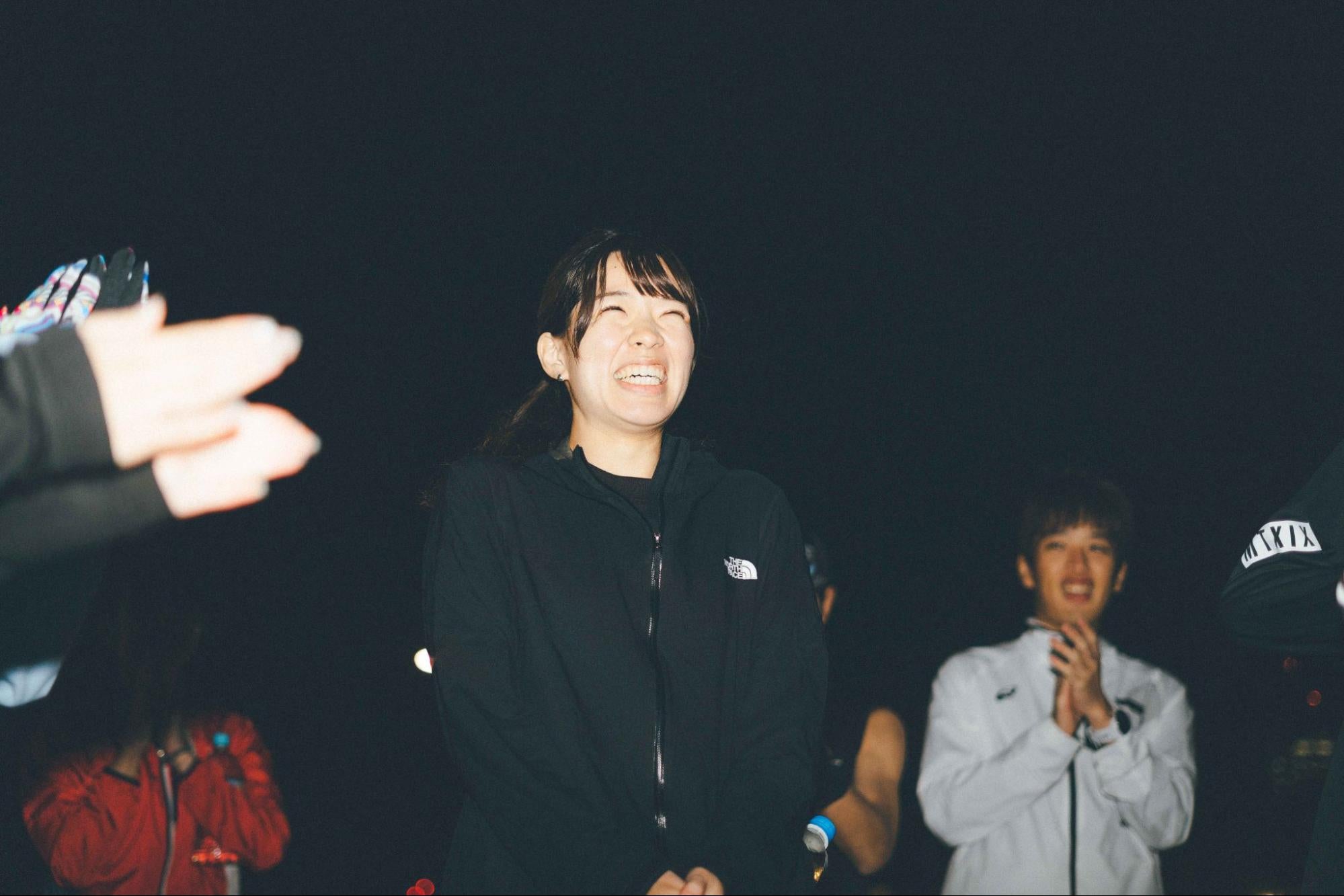
I also like the "let's take it easy" attitude.
RRC member interview
Text: Shun Sato

7th Cool C Team (Goal: Sub-4) MVP Natsuki Kawasaki
Anxiety in the second half of a marathon
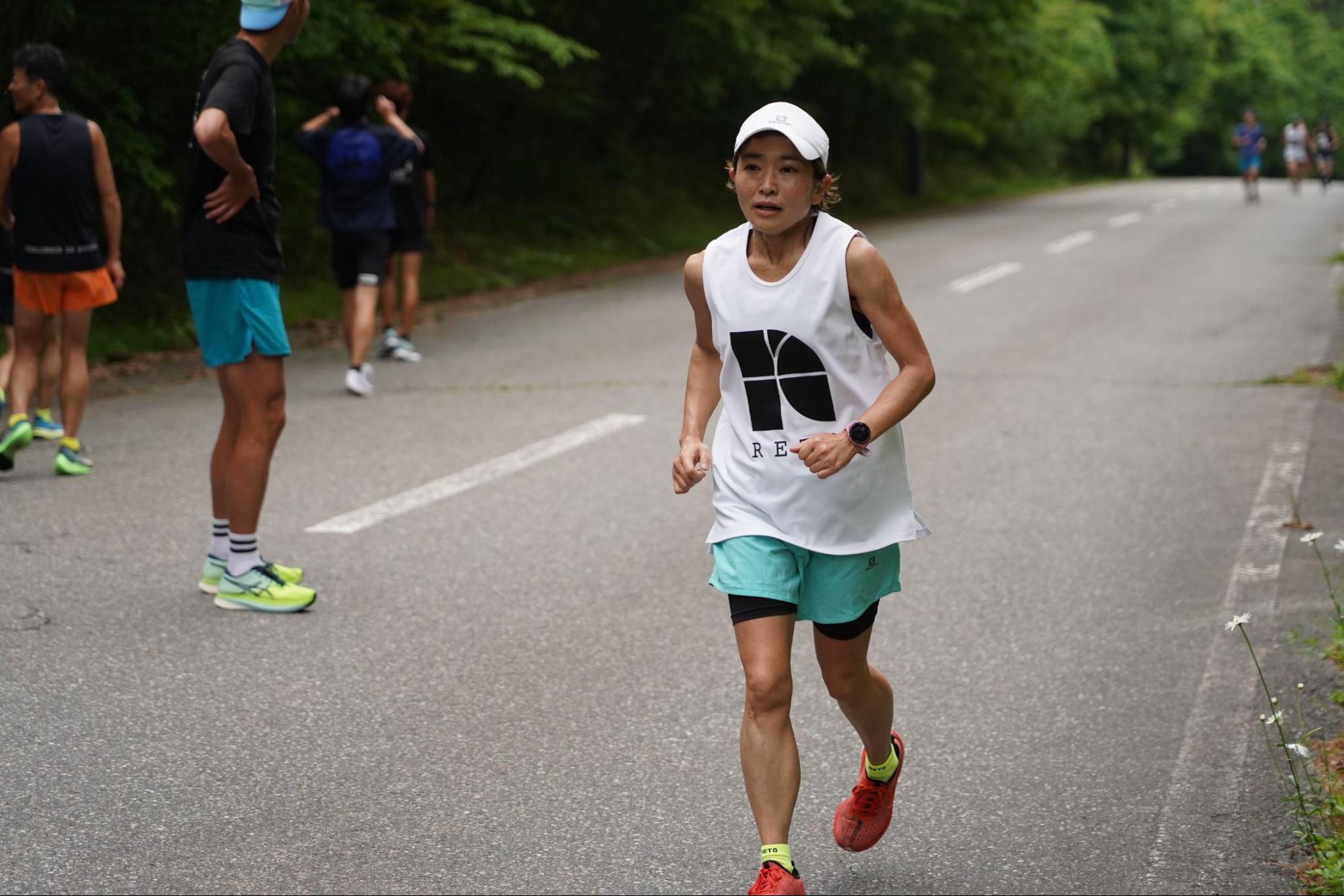
Although I managed to achieve a sub-4 time (3 hours 56 minutes 37 seconds) in the Tohoku Miyagi Reconstruction Marathon, it was a really tough race.
After the hot and difficult Hokkaido Marathon, the cooler weather finally allowed me to run again, and I ran over 100 kilometers in September and October, so I was able to race with no worries about my body. However, in my case, when I run a marathon, I start to experience gastrointestinal problems towards the end, and I get extremely nauseous. This has happened in past races, and I ended up just walking halfway through the Hokkaido Marathon. I don't usually have a weak stomach, but the symptoms start to appear towards the end of the marathon.

Inability to take in energy
This time too, I started the race a little worried about when the symptoms would come out, but the symptoms started around the 32km mark, and I threw up just drinking water at the water station. From that point onwards, I should have been taking gels and other drinks to keep going, but my body wasn't accepting fluids and my energy was depleted.

The voice that supported me
It was really tough, but I didn't stop there and managed to hold on from the 35km mark thanks to Yukorin (Hasebe Yuko). There was no other reason that I was able to finish the race (wry smile). If she hadn't pulled me there, I'm sure I would have just walked. I realized how much energy it gives me to have someone pulling me and encourage me.

New Switch
After achieving a sub-4 time in Miyagi, I felt burned out. The race itself was so tough that I didn't feel like aiming for a better time, and I thought, "I'll just maintain where I am." But when I went to cheer on the runners at the Shonan International Marathon, I saw everyone running hard and thought, "People who are simply achieving good times are so cool." It was like a different switch had flipped inside me. After that, I moved from the C team to the B team. When I finished the speed training menu, I thought to myself, "I can do this surprisingly well. I'll try a little harder and aim for a better time (3 hours 40 minutes)" (I achieved this in the Nagoya Women's Marathon in 3 hours 39 minutes 40 seconds).

To run long distances, which is difficult for me
I'd like to say that my attitude towards training has changed, but my dislike of running long distances in a monotonous manner remains the same. When I run alone, I try to think of ways to keep myself from getting bored, like "I'm going to run to this ramen shop" or "I won't come back until I've listened to this whole album." Rather than feeling like I have to do this training, I just do it depending on my mood, and I still do it my own way. I should really do the menu that Seiya presents to me, but I'm really sorry that I didn't see it (wry smile). The longer the distance, the more difficult it is to run alone, so I rely on Tamken training and the other members' independent training.

How to approach a marathon
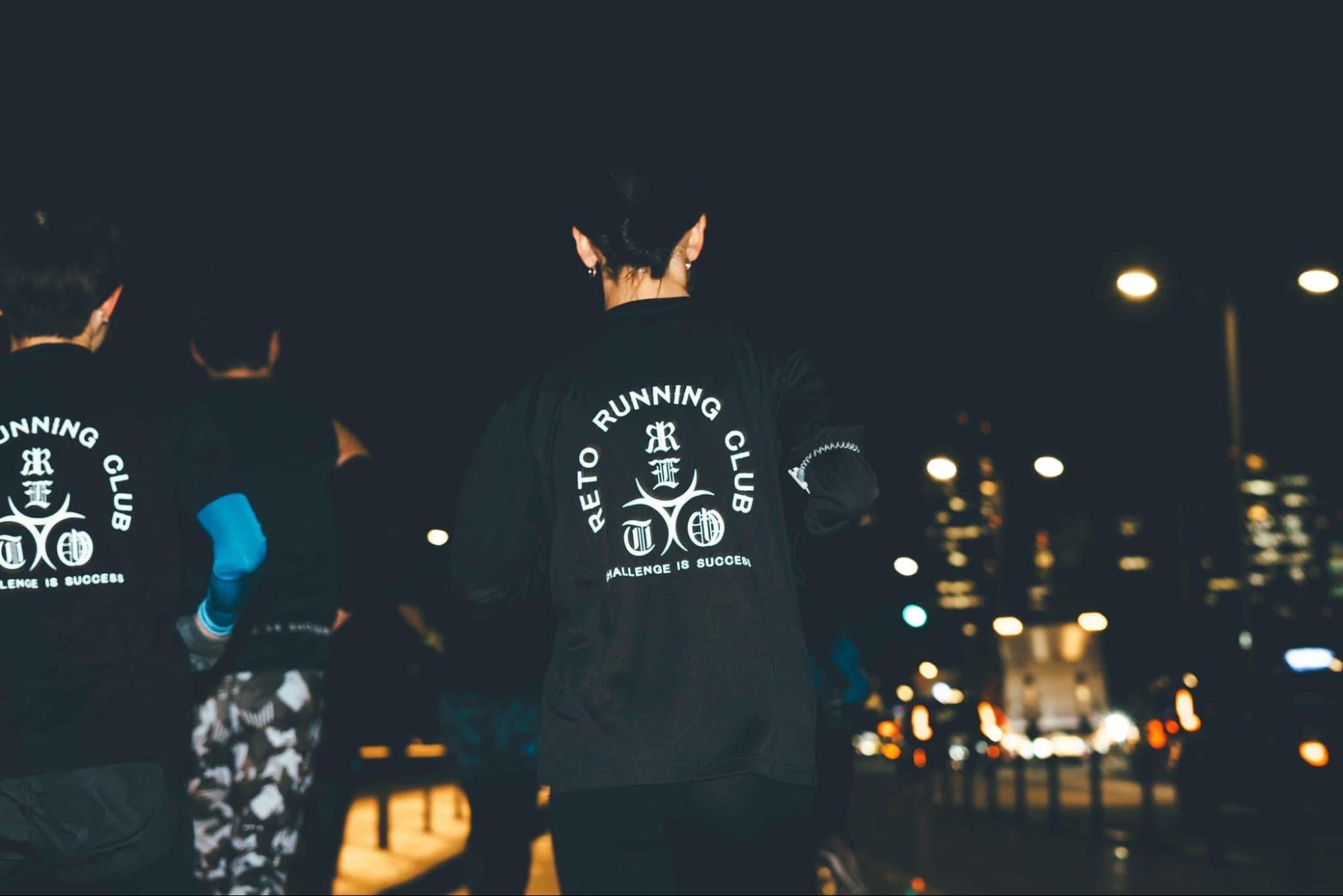
At RETO, whenever I want to get closer to a certain time or train harder, the door is always open, and I feel secure knowing that someone is there to support me. I'm sorry that I rely on them so much, but because I feel like I'm being supported, I naturally get more involved in cheering on the other members. I'm a laid-back person who goes at my own pace, and I'm pretty lenient in grading myself, and I'm the type who quickly becomes satisfied and thinks, "I did really well." Everyone at RETO is very strict with themselves and stoic about achieving their goals. I'm always amazed by how amazing they are, but I also like the "let's take it easy" kind of attitude. I'd like to continue running with a "casual approach, but do it when I feel motivated" style (laughs).



%20MVP%20Natsuki%20Kawasaki%0A%0A%0A%20Anxiety%20in%20the%20second%20half%20of%20a%20marathon%0A%0A%0A%20Although%20I%20managed%20to%20achieve%20a%20sub-4%20time%20(3%20hours%2056...)