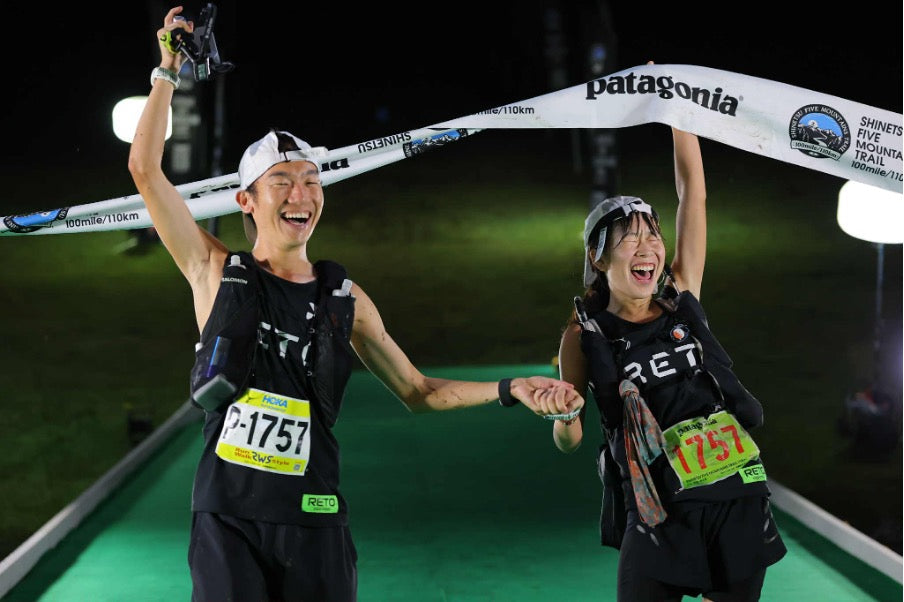
"Before the race, I did everything I could in the six months leading up to it to win" - Part 1
RRC member interview
Text: Shun Sato

Shinetsu Gogaku Trail Running Race 2025
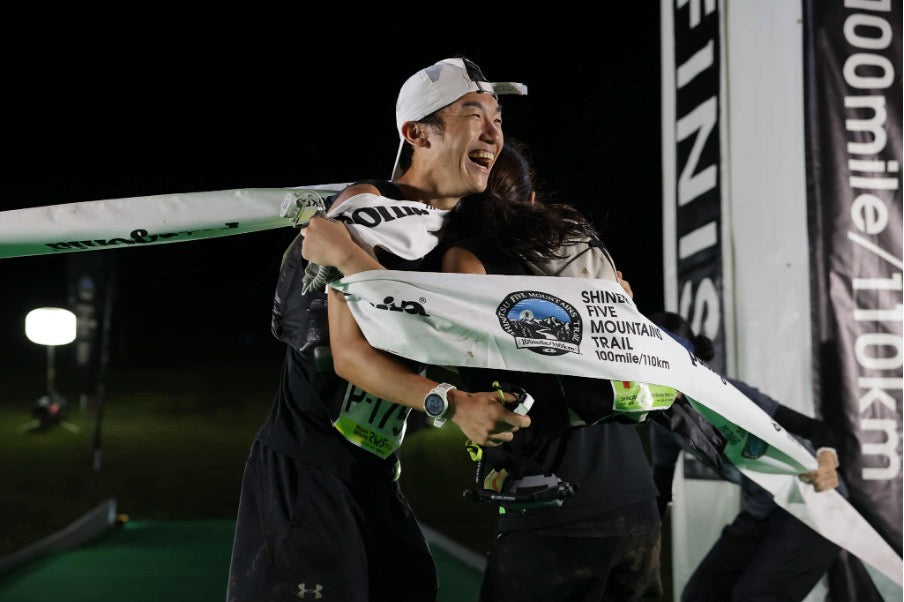
Yuna Sugita, 5th place in the 110km women's race
Decision to participate in Shinetsu
Yuna Sugita decided to run the 110km Shinetsu Five Mountains after volunteering at the same event a year ago. Someone from the organizing team told her, "You're volunteering so you can run Shinetsu next year, right?"
"Volunteers get priority entry into the Shinetsu race the following year, but I didn't know that at first and said, 'That's not true, I came here to volunteer!' But the organizers were really kind and the atmosphere of the race was great, so by the end it had become a race I longed to take part in. After I finished volunteering, I was told, 'We'll be waiting for you at the starting line next year,' so I decided, 'Okay, I'll take part in the Shinetsu race next year.'"

From Road to Trail
Although her motivation to participate in the Shinetsu Five Gaku mountaineering race grew, her goal at the time was to achieve results in road races. At the Mito Man'yu Marathon in October 2024, she finished in 3 hours, 7 minutes, and 15 seconds, just short of her goal of 3 hours, 6 minutes, which was the participation time for the Osaka International Women's Marathon. At the Tsukuba Marathon in November, she set a personal best of 3 hours, 4 minutes, and 19 seconds, surpassing her goal. At the Osaka International Women's Marathon in February of this year, she improved her personal best with a time of 3 hours, 00 minutes, and 43 seconds, and then at the Shizuoka Marathon in March, she achieved her long-awaited sub-3 time with a time of 2 hours, 59 minutes, and 14 seconds, concluding her road season with what could be called perfect results.

Going into the mountains every week
I started preparing for the Shinetsu Five Mountains climb in April.
My goal was to finish in 10th place. After training hard, I took part in the 50km race at Okushinano 100 in June to check my current condition, and I came in 2nd in the under 39 age group and 9th overall in the women's category. Looking at the results alone, it wasn't bad, but I personally felt like I just "couldn't run."
"At that time, I really wasn't running the way I wanted to. When I thought about why, I realized that I had absolutely no experience in the mountains. From that day on, I decided to go to the mountains every week."
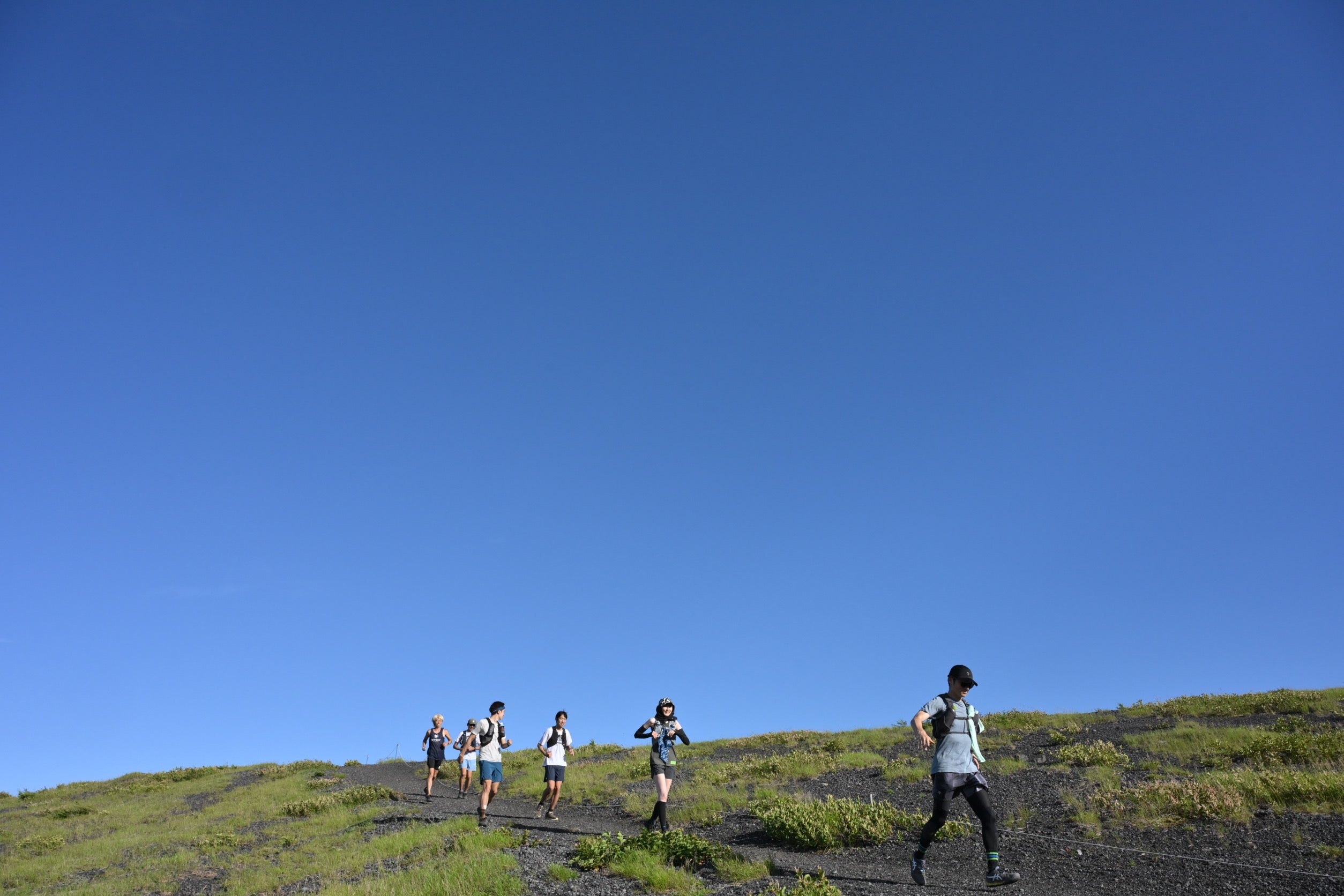
I usually went to the mountains on weekends, and when I couldn't go on the weekends, I took paid leave during the week. I mainly went to Mount Takao, and once I went there, I would stay there for at least five or six hours.
"Of course, I would go into the mountains and practice long distances, but when my legs were tired from road training, I would go into the mountains as a sort of active rest, and I always made it a priority to get my body used to the mountains."

Thorough research on rivals
Mountains don't always look the same. They change appearance with the passage of time, and races take place within that environment. For this reason, Sugita tried to imagine what it would be like to recover from symptoms like heatstroke in the mountains, imagining an actual race, and accumulating experience that can only be gained in the mountains, such as what to eat when you're feeling unwell.
"Looking back, I think that was one of my strengths. I was determined to win, so I looked at the winners and their times from the past three or four years and thought, 'This person is about this level of strength, so I must need about this level of training.' I also looked at them on social media to see how far they went into the mountains, what kind of training they did, and how much elevation they gained. I did thorough research to win."
Knowing your opponent is an essential rule of competition, but in order to compete against the fiercest mountain warriors and win a prize, he had to overcome his own weaknesses.

Overcoming weaknesses
"I wasn't very good at mountain climbing. It's completely different from road climbing, so I focused a lot on practicing. As I continued to practice climbing, I noticed something: even if I felt like I was in good shape, there were days when I could climb and days when I couldn't. On the road, that kind of difference in body control doesn't come up, but in the mountains it does, and I didn't understand why."
In order to find out the cause, I checked the weather and my physical condition every time, and looked at what I had done up until the day before going into the mountains, and I discovered that it was something simple.
"In the end, it all came down to eating well and sleeping well. I got a solid eight hours of sleep, and when it comes to road training, I deliberately run on an empty stomach, but in the mountains, you can't run to the end unless you have a good balance of carbohydrates, protein, and iron. It's a simple thing, but being able to understand it was huge."

Pacer Requirements
At the same time, he was also thinking about who would be a pacer. When he asked the RETO members, "Who would be a good pacer?", they suggested several candidates, saying, "For a long trail race, a pacer should be someone with experience and knowledge of the mountains." However, Sugita still didn't quite find the right person.
"I had heard that the mountains are tough, so rather than someone who just says, 'I'll be a pacer!' I wanted someone who had a lot of determination, someone who might even worry a little about whether they could be a pacer for the Shinetsu route. Also, I'm determined to train seriously, so I wanted someone who would be determined to train with me."
At that time, the name that came up was Yoshikawa Takashi, also known as "Kitchy."

The ideal pacer
RETO member Takahiko Konan recommended the idea, saying, "Given Kitchi's personality, I think he'll accommodate some of your selfish requests."
"I thought, 'Ah, that's true!' (laughs). I could imagine Kitchi not getting angry even if I ended up being harsh while we were running, and when he kindly asked me during the race, 'Do you need this?' and I was like, 'Of course I don't need it,' I intuitively felt that he would understand even if it seemed like an annoyance (laughs). Also, Kitchi can run a full marathon in under 2 hours 35 minutes, so his running ability is incredibly high. So when I asked Kitchi for help, he said, 'I might not be able to do it. Let me think about it properly,' and he thought about it carefully, and he matched up with my ideal in that it seemed like he would be able to overcome things together with me, regardless of whether he had experience in mountain races or not."
When people are placed in harsh conditions, their true nature comes out. Perhaps for this reason, it is said that fights often occur between athletes and pacers on trails. It is difficult to predict what will happen when they are pushed to their limits, and when they do, all inhibitions are removed and emotions are exposed, so it is inevitable that they will clash. However, if the pacer has the time and energy, conflicts can be kept to a minimum. Yoshikawa was a pacer who was greedy for victory, but also calm and gentle, and was able to accept all of Sugita's thorns and spears.

Perfect preparation
Sugita had decided that if Yoshikawa couldn't join, he would run alone. After careful consideration, Yoshikawa finally replied three days before the deadline for pacer registration.
"Kitchy agreed to do it, and we went into the mountains together twice. We pushed ourselves pretty hard during the training, and what we checked there was my behavior and state when I reached my limit. We worked out all sorts of things to help us win, such as I can't run on this slope of the mountain, my breathing should be like this when my heart rate is over 160, and how I should behave if I exceed my limit. In the end, Kitchy was able to tell my heart rate from my breathing, so I think it was good training."
I also checked my nutritional needs. As a result, I found that I wanted to eat rice, especially inari sushi, and that pickles, miso soup, and energy-boosting jelly and ramune go well together.
"I made sure I had everything I needed and told the support team about it. I did everything I could in the six months leading up to the race, including practice. I'd be lying if I said I wasn't nervous, but the day before the race I just wanted to run quickly, let me run quickly (laughs). I often feel that way when I'm in good shape, so I was sure Shinetsu would be fine."
It would be a tough race in the rain, aiming for a place. But it would surely be a great event. Believing in this hunch, Sugita stood at the starting line of the 110km Shinetsu Gogaku course.